The Insider Brief

This is where smart buyers and sellers get the real story on real estate — market shifts, what to look for in an agent, and the insider knowledge most people don't have until they're already in the middle of a deal. Clear, useful, and straight from someone who's spent a decade in the industry. Subscribe and stay ahead of your next move.

Cities, Florida John Voirol | St. Louis REALTOR® Cities, Florida John Voirol | St. Louis REALTOR®

In Miami, the Condo You Love Is Only as Good as the Building It's In - Buyer Beware

One of the most common mistakes I see from buyers relocating to Miami is treating a condominium purchase the way they'd treat a single-family home purchase. They evaluate the unit — the layout, the finishes, the view, the floor plan. They make an offer. And somewhere in the transaction, they discover that the building has a $40,000 special assessment pending, that the reserve fund is at 12% of the SIRS-recommended level, and that Fannie Mae won't finance units in the building.

One of the most common mistakes I see from buyers relocating to Miami is treating a condominium purchase the way they'd treat a single-family home purchase. They evaluate the unit — the layout, the finishes, the view, the floor plan. They make an offer. And somewhere in the transaction, they discover that the building has a $40,000 special assessment pending, that the reserve fund is at 12% of the SIRS-recommended level, and that Fannie Mae won't finance units in the building.

Florida's new mandatory reserve law changed what you're required to look at before you buy. The Structural Integrity Reserve Study — required for all condo buildings three stories or higher, with full funding mandatory as of January 1, 2026 — creates a paper trail about a building's financial health that did not previously exist in a standardized form.

That paper trail is your due diligence. Request the SIRS report. Review the reserve fund balance against the SIRS recommendations. Look at the most recent HOA meeting minutes for any discussion of pending assessments or structural issues. Ask specifically about milestone inspection findings.

A beautiful unit in a financially troubled building is a liability dressed up as a luxury purchase. In Miami's condo market right now, building fundamentals matter more than unit finishes. Price accordingly, and make sure your agent knows the difference.

John Voirol | John's Agents | Find My Agent


Read More About Moving to Miami

Read More
Florida, Cities John Voirol | St. Louis REALTOR® Florida, Cities John Voirol | St. Louis REALTOR®

Moving to Miami? It’s Now a Global City. Here’s What You Need to Know.

The U.S. Census Bureau confirmed it: Miami is now the number two destination in the United States for international migration. Not the number two city people are moving to from Texas or California. The number two destination for people arriving from other countries entirely — ahead of cities three and four times its size, absorbing wealth, capital, and ambition from Latin America, Europe, and the Middle East in volumes that would have seemed implausible fifteen years ago.

This is not a real estate marketing claim. It is a structural shift in how global wealth thinks about where to live.

For buyers considering a move there, this is important context. The city you would be buying into in 2026 is materially different from the one that existed a decade ago. So is the decision.

The U.S. Census Bureau confirmed it: Miami is now the number two destination in the United States for international migration. Not the number two city people are moving to from Texas or California. The number two destination for people arriving from other countries entirely — ahead of cities three and four times its size, absorbing wealth, capital, and ambition from Latin America, Europe, and the Middle East in volumes that would have seemed implausible fifteen years ago.

This is not a real estate marketing claim. It is a structural shift in how global wealth thinks about where to live.

The pandemic accelerated something that had been building for years: the legitimization of Miami as a primary residence for people who could live anywhere in the world. Hedge funds moved their headquarters from Manhattan. Tech founders landed and stayed. Private equity firms opened offices. The financial and professional infrastructure that followed turned a perception into a reality — Miami is no longer a vacation city with a real estate market attached. It is a global city with a real estate market to match.

For buyers considering a move there, this is important context. The city you would be buying into in 2026 is materially different from the one that existed a decade ago. So is the decision.


What Makes Miami Compelling — Genuinely

Start with the fundamentals, because they are more substantial than the lifestyle marketing would suggest.

Florida has no state income tax. For a high earner relocating from California, New York, or Illinois, this is not a marginal benefit. It is a meaningful annual financial shift that compounds over time and changes the math of a move significantly. Combined with a business-friendly regulatory environment and the absence of estate and inheritance taxes, Florida's tax structure has been one of the most powerful engines of the wealth migration story.

The weather, which tends to be mentioned early and dismissed as obvious, is more consequential than it sounds. Miami has a genuine outdoor lifestyle twelve months a year — not in the aspirational sense that gets applied to cities with four distinct seasons, but literally. The bay, the beaches, the boating culture, the outdoor dining year-round — these are not features you visit. They are features you build your daily life around. For people arriving from northern climates, this reconfiguration of daily life is routinely described as transformative in ways they didn't fully anticipate before moving.

The cultural infrastructure has matured significantly. Art Basel Miami Beach has made the city an international arts destination for two weeks in December that no longer feels like a visiting circus but an embedded part of the city's identity. Wynwood, which fifteen years ago was a warehouse district, is now a global destination for street art, design, hospitality, and increasingly luxury residential development. The Adrienne Arsht Center for the Performing Arts is one of the great performance venues in the Southeast. The dining scene, driven by the city's extraordinary Latin American cultural influence and the international buyers and visitors who have arrived in waves, now operates at a level of genuine sophistication that extends well beyond South Beach's theatrical restaurants into neighborhoods like Coconut Grove, Coral Gables, and Brickell.

The cultural diversity is not just present in Miami — it is the city's identity. More than 70% of Miami-Dade County residents are Hispanic or Latino. The city is functionally bilingual in English and Spanish, and its connections to Latin American business, culture, and family networks are structural, not incidental. For buyers from Latin America, this creates a specific kind of belonging that few American cities can offer. For buyers from elsewhere, it creates a richness of cultural experience that is genuinely unlike anything available in the Sun Belt markets that have absorbed so much inbound migration in recent years.


The Market in 2026: Where It Stands

Miami's real estate market in 2026 has entered what most observers describe as a more mature cycle — not the frenzy of 2021-2023, but not a retreat either. It is a bifurcated market in which outcomes are determined almost entirely by location, building quality, and price point rather than the broad tailwinds that lifted every segment during the pandemic era.

At the top end, the luxury market has not softened. Combined sales of properties priced above one million dollars surged more than 21% year-over-year in January 2026. South Florida recorded its highest-ever number of $20 million-plus condo transactions in 2025, alongside near-record activity in the $10 million tier. Cash buyers account for 44% of January closings — well above the national average of around 27%. The prevalence of cash buyers from international markets and domestic migration creates a competitive dynamic that buyers using financing need to understand before they start making offers.

At the broader market level, single-family homes in Miami-Dade trade for approximately $640,000 to $650,000, while condo prices average around $420,000. These numbers reflect a more balanced environment than in recent years — inventory has increased, homes are taking approximately 90 to 105 days to sell, and sellers in most segments are negotiating in ways they were not two years ago. Buyers have more time and more leverage than at any point since 2020.

The neighborhood picture is essential. Miami is not one market. Coral Gables, Coconut Grove, Miami Beach, Brickell, Edgewater, Wynwood, and the broader Miami-Dade suburban landscape each operate under their own supply, demand, and buyer profile conditions. Coral Gables, for instance — with its Mediterranean Revival architecture, tree-lined streets, and proximity to top private schools and the University of Miami — is seeing homes in the $3 million to $6 million range absorbed in roughly two months, with price reductions becoming less common. Ultra-luxury properties above $10 million often sell within four months. Inventory is historically low. This is not a market where buyers have leverage. Brickell, Miami's financial hub, is a different story — with 17 months of supply and listings averaging 113 days on market, the Brickell condo buyer has negotiating room that buyers in Coral Gables simply don't.

Understanding which neighborhood you're actually targeting — and which agent actually knows that neighborhood from the inside — is the most consequential variable in a Miami purchase.


The FIFA World Cup: What It Actually Means for Real Estate

Miami is hosting seven FIFA World Cup 2026 matches at Hard Rock Stadium between June 15 and July 18, 2026. The projected economic impact exceeds one billion dollars, according to the FIFA World Cup 2026 Miami Host Committee. More than 30 days of citywide activation are planned around the matches. Hundreds of thousands of international visitors are expected.

This matters to real estate buyers for a reason that goes beyond the obvious rental income opportunity.

The World Cup introduces Miami to enormous audiences of high-net-worth individuals from countries that have historically been significant buyers in the luxury market — Latin America, Europe, the Middle East — many of whom will be visiting Miami for the first time or experiencing it in a new way. Historically, global sporting events at this scale have functioned as accelerants for real estate demand: people visit as fans and return within 12 to 24 months as buyers. The FIFA organization itself has committed to Miami as more than a tournament venue — it opened a 60,000-square-foot office in Coral Gables and permanently relocated its legal and compliance division from Zurich. FC Barcelona relocated its U.S. commercial operations from New York to downtown Miami. The Argentine Football Association is building a U.S. headquarters and training facility in North Bay Village.

These are not temporary activations. They are institutional commitments that reflect a long-term conviction about Miami's place in global commerce and culture.

For buyers considering Miami right now, the World Cup is relevant in two distinct ways. For those with properties that have short-term rental permissions, the rental demand and pricing during match windows will be significant — analysts project premium short-term rental rates could increase 150-200% during the event. For buyers not focused on short-term rental income, the more important implication is the international visibility the city is about to receive. If Miami's trajectory has been driven by the city being discovered by successive waves of sophisticated buyers, the World Cup is the single largest discovery event in the city's history. The buyers who are positioned before that event — not after — are the ones who benefit from what follows.


The LGBTQ+ Picture in Florida — An Honest Assessment

This is a conversation that belongs in any complete picture of Miami for buyers evaluating where to put down permanent roots.

Miami's city culture has a long and genuine history of LGBTQ+ inclusion. South Beach and Wynwood are home to some of the most visible and established LGBTQ+ communities and businesses in the Southeast. The arts, hospitality, and nightlife culture of the city is welcoming in practice in a way that is felt rather than just stated. Miami's international character and cosmopolitan culture tend to produce a social environment that is broadly tolerant in ways that extend well beyond legal frameworks.

The state of Florida, however, has moved in a meaningfully different direction at the legislative level. Florida is one of several states that has enacted legislation restricting gender-affirming care for minors, limiting certain school instruction related to sexual orientation and gender identity, and creating broader tensions around DEI policies and protections. In contrast to Illinois — which added sexual orientation and gender identity as protected classes under state law in 2005 and 2006 respectively — Florida's state-level legal protections for LGBTQ+ individuals in housing and employment are less comprehensive and have been subject to ongoing political contestation.

For LGBTQ+ buyers, the practical reality of Miami is layered in a way that requires genuine evaluation rather than either dismissal or alarm. The city-level experience is welcoming. The cultural environment is open. The legal environment at the state level is less protective than in states like Illinois, California, or New York, and that gap has been widening in recent years. Federal protections provide a floor, but that floor has been subject to uncertainty under the current federal administration.

This is not a reason to dismiss Miami. It is a reason to understand it fully — and to make a decision based on accurate information rather than either the city's reputation for openness or the state's legislative direction in isolation.


What Serious Buyers Need to Get Right Before They Look

Miami rewards preparation more than almost any market in the country, because the gaps between getting it right and getting it wrong are wide — in price, in carrying costs, in legal exposure, and in the quality of the agent relationship.

The neighborhood question comes first. Not "Miami" — which specific neighborhood, which specific building or street, and which agent actually knows it at the level you need. A specialist in Coconut Grove is a generalist in Brickell. These are not interchangeable markets.

The condo question comes second and is the subject of its own dedicated piece this week. Florida enacted sweeping condo safety legislation in the wake of the Surfside collapse, and mandatory reserve funding requirements went into full effect January 1, 2026. A significant number of eligible buildings are reportedly non-compliant. Before you make any offer on a Miami condo, you need to understand the building's milestone inspection status, its Structural Integrity Reserve Study compliance, its reserve fund level, and its HOA financial health. These are not optional steps. They are the difference between buying a sound asset and buying into someone else's deferred maintenance.

The carrying cost calculation comes third. Property taxes in Miami-Dade run approximately 1.3-1.5% of assessed value annually. Insurance — coastal, hurricane — runs 0.6-1.2% of property value. HOA fees in luxury buildings can exceed $2,000 per month. Add any special assessments for buildings in the middle of required structural work, and carrying costs on a luxury Miami property can approach 3-4% of the property value per year. Model this before you fall in love with a monthly payment that doesn't include those line items.

This is the kind of context that a great local agent gives you before you're in contract. Finding that agent — one who knows your specific target neighborhood, understands the condo legal landscape, and can walk you through the full financial picture of a purchase — is what I do.


John Voirol | John's Agents | Find My Agent


Read More
Florida, Relocation, Cities John Voirol | St. Louis REALTOR® Florida, Relocation, Cities John Voirol | St. Louis REALTOR®

Luxury Home Sales Above $1M in Miami Just Jumped 21%. Here's What That Signals.

The headline from Miami-Dade County's January 2026 closing data is unusually clear: combined sales of properties priced above one million dollars surged more than 21% year-over-year. Both single-family homes and condominiums recorded similar increases. South Florida posted its highest-ever number of $20 million-plus condo transactions in 2025, alongside near-record activity at the $10 million tier. Cash buyers accounted for 44% of all closings in December 2025 — well above the national average of roughly 27%.

This is not a market in retreat. At the top end, Miami is operating as if the broader national softening does not apply. Understanding why is useful for buyers evaluating whether the price points they're looking at are defensible over time.

The headline from Miami-Dade County's January 2026 closing data is unusually clear: combined sales of properties priced above one million dollars surged more than 21% year-over-year. Both single-family homes and condominiums recorded similar increases. South Florida posted its highest-ever number of $20 million-plus condo transactions in 2025, alongside near-record activity at the $10 million tier. Cash buyers accounted for 44% of all closings in December 2025 — well above the national average of roughly 27%.

This is not a market in retreat. At the top end, Miami is operating as if the broader national softening does not apply. Understanding why is useful for buyers evaluating whether the price points they're looking at are defensible over time.

What is driving sustained demand at the luxury level

Florida is projected to add over five million residents in the coming decades, according to demographic research cited by analysts tracking the market. The composition of that migration matters as much as the volume. The individuals moving to South Florida are significantly wealthier than the national average — bringing higher incomes, greater purchasing power, and different expectations around product quality and lifestyle. This is a structural demand shift, not a cyclical spike.

International buyers represent another durable supply of luxury demand. More than 120,000 individuals arrived in Miami-Dade from abroad in a twelve-month period. International buyers account for more than half of pre-construction tower sales in some segments. The global perception of Miami as a stable, dollar-denominated asset in a favorable tax jurisdiction has proven resilient even as interest rates have affected the broader market.

The bifurcation buyers need to understand

The 21% jump in luxury sales coexists with softening in the mid-tier condo market, where older buildings, underfunded reserves, and the new compliance requirements under Florida's condo safety law are creating pricing pressure on properties that don't meet current standards. This is not one market moving in one direction — it is a market where quality, location, and building fundamentals determine everything, and the gap between the right asset and the wrong one is widening.

This is exactly the dynamic where having the right agent — one who knows the building landscape specifically — produces outcomes that a generalist cannot.

John Voirol | John's Agents | Find My Agent

Read More
Relocation, Florida, Cities John Voirol | St. Louis REALTOR® Relocation, Florida, Cities John Voirol | St. Louis REALTOR®

Florida's New Condo Law Is Now in Full Effect. What Every Miami Buyer Needs to Know.

If you are buying a condo in Miami — or anywhere in Florida — the most important piece of legislation affecting your purchase went into full mandatory effect on January 1, 2026. Most buyers don't know it exists. Many of the buildings they're considering are not yet in compliance with it.

Here is what happened and why it matters.


If you are buying a condo in Miami — or anywhere in Florida — the most important piece of legislation affecting your purchase went into full mandatory effect on January 1, 2026. Most buyers don't know it exists. Many of the buildings they're considering are not yet in compliance with it.

Here is what happened and why it matters.

Following the 2021 Champlain Towers collapse in Surfside, Florida, which killed 98 people due to structural failure driven in part by severely underfunded building reserves, Florida enacted sweeping condo safety legislation. The law, and its subsequent updates, created three core requirements for condominium buildings three stories or higher: mandatory structural inspections known as Milestone Inspections, Structural Integrity Reserve Studies (SIRS), and mandatory reserve funding for structural components.

The SIRS deadline was December 31, 2025. Mandatory reserve funding began January 1, 2026. Critically, associations can no longer waive or reduce these reserves by owner vote — a practice that had been common for decades and that allowed buildings to defer maintenance expenses by spreading them among future owners. That mechanism is gone.


What a SIRS actually is and why it matters to you as a buyer

A Structural Integrity Reserve Study is a detailed engineering assessment of a building's structural components and a financial analysis of how much money must be set aside annually to fund their repair or replacement. It covers the components that matter most to building safety: roof, load-bearing walls, floor systems, foundation, and waterproofing systems, among others.

Before January 2026, many Florida condo associations had been operating for years with reserve funds far below what their buildings actually required. The new law forces an accounting. And industry estimates suggest that more than half of eligible Florida buildings had not completed their SIRS as of early 2026.


What this means to your Miami real estate deal

A building that missed the SIRS deadline and has not complied with mandatory reserve funding requirements is a red flag — not just from a safety standpoint, but from a financing and resale standpoint. Non-compliant buildings can face financing restrictions from major lenders, accelerated assessment timelines as required structural work is funded, and penalties. Fannie Mae and Freddie Mac have their own overlapping requirements that can affect whether a lender will finance a unit in a non-compliant building.

Before making any offer on a Miami condo, request and review: the building's SIRS completion status and report, the most recent milestone inspection report if the building is 25 or more years old and within three miles of the coast, the current reserve fund balance relative to the SIRS recommendations, and any pending or recently completed special assessments.

Buyers now have a 7-day rescission period — up from 3 days under the previous law — to review these documents after receiving them. Use all seven days. A knowledgeable local agent will review this documentation as a standard part of due diligence, not as an afterthought.


John Voirol | John's Agents | Find My Agent


Read More
Florida, Cities John Voirol | St. Louis REALTOR® Florida, Cities John Voirol | St. Louis REALTOR®

The FIFA World Cup Is Coming to Miami. Here’s How it’s Affecting the Real Estate Market.

Miami is hosting seven FIFA World Cup 2026 matches between June 15 and July 18. The FIFA World Cup 2026 Miami Host Committee projects more than a billion dollars in economic impact and more than 30 days of citywide activation around the event. Hundreds of thousands of international visitors are expected.

If you are considering buying in Miami, this matters in ways that go beyond the obvious short-term rental opportunity.


Miami is hosting seven FIFA World Cup 2026 matches between June 15 and July 18. The FIFA World Cup 2026 Miami Host Committee projects more than a billion dollars in economic impact and more than 30 days of citywide activation around the event. Hundreds of thousands of international visitors are expected.

If you are considering buying in Miami, this matters in ways that go beyond the obvious short-term rental opportunity.


The visibility effect

The World Cup introduces Miami to massive audiences of high-net-worth individuals from countries that have historically been significant buyers in the luxury market. Latin American buyers, European buyers, buyers from the Middle East — many of whom will be visiting Miami in depth for the first time, or experiencing it in a new context. Historical data from previous World Cup host cities suggests a meaningful uptick in real estate interest among visitors within 12 to 24 months following the event. People visit as fans and return as buyers.

FIFA itself has committed institutionally to Miami beyond the tournament — it opened a 60,000-square-foot office in Coral Gables and permanently relocated its legal and compliance division from Zurich. FC Barcelona relocated its U.S. commercial operations from New York to downtown Miami. The Argentine Football Association is building a U.S. headquarters and training facility in Miami-Dade County's North Bay Village. These are long-term commitments, not event-driven activations, and they reflect a conviction about Miami's place in global commerce that extends well past July 18.


The short-term rental picture

For buyers with properties that have short-term rental permissions, the match window demand will be significant. Analysts project premium short-term rental rates could increase 150-200% during the event. Game-day hotel rates in host cities are already running more than 31% above non-match nights. Properties within walkable distance of transit connections, in neighborhoods like Brickell and Downtown Miami, are positioned to capture the most concentrated demand.

The important caveat: short-term rental permissions in Miami are building-specific and neighborhood-specific. Not all properties in Miami allow short-term rentals, and the rules have tightened in several neighborhoods in recent years. If rental income during the World Cup is part of your financial model, verify the specific permissions for any address before you are in contract.


The buyer's takeaway

The World Cup is the largest single visibility event in Miami's history as a global city. The buyers positioned before that exposure lands — not after — are the ones who benefit from the demand that follows. If Miami has been on your radar, the timing is worth taking seriously.


John Voirol | John's Agents | Find My Agent


Read More
Florida, Cities, Relocation John Voirol | St. Louis REALTOR® Florida, Cities, Relocation John Voirol | St. Louis REALTOR®

How to Find the Best Neighborhoods in Miami - A Guide for Buyers

One of the most common mistakes buyers make when approaching Miami is treating it as a single market with a single set of conditions. The city has more than fifteen distinct neighborhoods operating under their own supply, demand, buyer profile, and price point dynamics. The experience of living in Coral Gables bears almost no resemblance to living in Brickell or Wynwood or Miami Beach. Making a decision about "Miami" without knowing which Miami you're targeting is a significant financial decision made on insufficient information.

Here is the lay of the land for serious buyers.

One of the most common mistakes buyers make when approaching Miami is treating it as a single market with a single set of conditions. The city has more than fifteen distinct neighborhoods operating under their own supply, demand, buyer profile, and price point dynamics. The experience of living in Coral Gables bears almost no resemblance to living in Brickell or Wynwood or Miami Beach. Making a decision about "Miami" without knowing which Miami you're targeting is a significant financial decision made on insufficient information.

Here is the lay of the land for serious buyers.

Coral Gables — Prestige, Scarcity, and Long-Term Stability

Coral Gables is Old Miami money meeting new global demand. The Mediterranean Revival architecture, wide tree-lined streets, and strict development controls create a preservation ethos that limits supply in ways that have consistently supported long-term value. The neighborhood sits adjacent to the University of Miami and some of the best private schools in South Florida, making it the destination of choice for families with children.

Homes in the $3 million to $6 million range here are being absorbed in roughly two months. Ultra-luxury properties above $10 million often sell within four months. Inventory is historically low, and price reductions are becoming less common. Gables Estates, the gated waterfront enclave within Coral Gables, is routinely described as one of the most expensive residential communities in the United States. International buyers — particularly from Latin America — value Coral Gables for its privacy, security, and architecture that evokes European precedents in a U.S. legal and ownership framework.

If you want prestige, scarcity, and a neighborhood that is unlikely to change in ways that surprise you, Coral Gables is the most durable bet in the Miami market.

Coconut Grove — Nature, Community, and the Boating Life

Coconut Grove is the antidote to the verticality and pace of Brickell. It is lush, residential, human in scale, and organized around the water in a way that the city's more urban neighborhoods are not. Daily life here includes boating, waterfront farmers markets, outdoor gathering, and a neighborhood identity that residents describe with genuine attachment.

The condo market in Coconut Grove rewards buildings with strong reserves, generous floor plans, and premium water views. The single-family market east of Main Highway is the priority for buyers who want the full Coconut Grove experience — private, green, and close to the water. This is not a neighborhood for buyers who want the energy and convenience of urban density. It is for buyers who want to feel like they're living in a city and somewhere else entirely at the same time.

Brickell — Urban Intensity and the Buyer with Leverage

Brickell is Miami's financial hub — vertical, fast, international, and increasingly the home of the city's expanding technology and finance sector. The proximity to corporate offices, the walkability, and the building amenity packages in the luxury towers attract a buyer who wants to live close to work in an environment that does not require a car.

The current market conditions in Brickell are the most buyer-friendly in the entire Miami market. With 17 months of supply and listings averaging 113 days on market, buyers have meaningful negotiating leverage on price and terms. Offers at 5-8% below asking are reasonable starting points in many buildings. The caveat: building selection matters enormously. A beautiful unit in a financially troubled building with deferred maintenance and underfunded reserves — newly visible under Florida's mandatory SIRS compliance requirements — is a terrible investment regardless of the price. Due diligence on the building's financials is at least as important as due diligence on the unit itself.

Miami Beach — The Icon with Trade-offs

Miami Beach is the Miami that the world knows: the oceanfront, the Art Deco architecture, the international visibility. It is also a barrier island with flooding risks that are real and escalating, insurance challenges that are severe, and a short-term rental regulatory environment that has tightened considerably in recent years.

Buyers purchasing in Miami Beach need to understand the specific elevation of any property they're considering, the flood zone designation, the insurance costs at that address, and the short-term rental rules for the specific neighborhood. These are not abstract risks. They are current, specific, and material to the financial picture of owning there. The right property in Miami Beach — well-located, well-built, properly insured — remains one of the most coveted real estate positions in the world. The wrong one is an expensive and stressful education.

Wynwood — The Appreciation Play with Evolving Character

Wynwood has completed its transformation from industrial arts district to genuine residential luxury neighborhood. New construction pricing ranges from $850 to $1,100 per square foot — below Brickell and Miami Beach for comparable product. The neighborhood continues attracting design-forward buyers and investors who see its trajectory clearly. This is a 2026 entry point with long-term upside as the neighborhood's transition to full luxury residential status completes. It is also a neighborhood that changes faster than most, and the right agent is one who has watched it evolve rather than one who knows it from its reputation alone.

The Miami market, at any price point, rewards buyers who know exactly where they're going before they start touring. Finding an agent with the specific neighborhood expertise to match your target is the most important single step in a Miami home search.


John Voirol | John's Agents | Find My Agent

Read More
Illinois, Cities, LGBTQ+ John Voirol | St. Louis REALTOR® Illinois, Cities, LGBTQ+ John Voirol | St. Louis REALTOR®

Illinois Has Some of the Strongest LGBTQ+ Housing Protections in the Country. Here's What That Means for Buyers.

For LGBTQ+ buyers evaluating where to put down roots, the legal environment of the state they're buying in is not an abstract consideration. It shapes what protections exist when something goes wrong — in a housing transaction, in a rental, in a workplace. And those protections vary enormously by state.

For LGBTQ+ buyers evaluating where to put down roots, the legal environment of the state they're buying in is not an abstract consideration. It shapes what protections exist when something goes wrong — in a housing transaction, in a rental, in a workplace. And those protections vary enormously by state.

Illinois is among the most protective environments in the country. The Illinois Human Rights Act added sexual orientation as a protected class in 2005 and gender identity in 2006 — years before most states and well before federal protections were clarified. The law prohibits discrimination in housing, employment, education, and public accommodations. These are not aspirational goals. They are enforceable state law, administered by the Illinois Department of Human Rights.

Illinois has continued expanding these protections in recent years, adding source of income protections in housing, immigration status protections in housing, and AI discrimination safeguards in employment. At a moment when federal protections are subject to political volatility, Illinois's state-level framework provides a floor that exists independently of what happens in Washington.

For LGBTQ+ buyers considering Chicago specifically, the city's culture is genuinely and historically welcoming in a way that goes beyond legal protection — the Boystown neighborhood in Lakeview has been a center of LGBTQ+ community life for decades, and the city's arts, hospitality, and professional communities reflect that openness throughout.


John Voirol | John's Agents | Find My Agent


Keep Reading About Moving to Chicago
Read More
Illinois, Luxury Homes, Cities John Voirol | St. Louis REALTOR® Illinois, Luxury Homes, Cities John Voirol | St. Louis REALTOR®

Downtown Chicago's Luxury Market Is Back. Here's Why — and What It Means for Buyers.

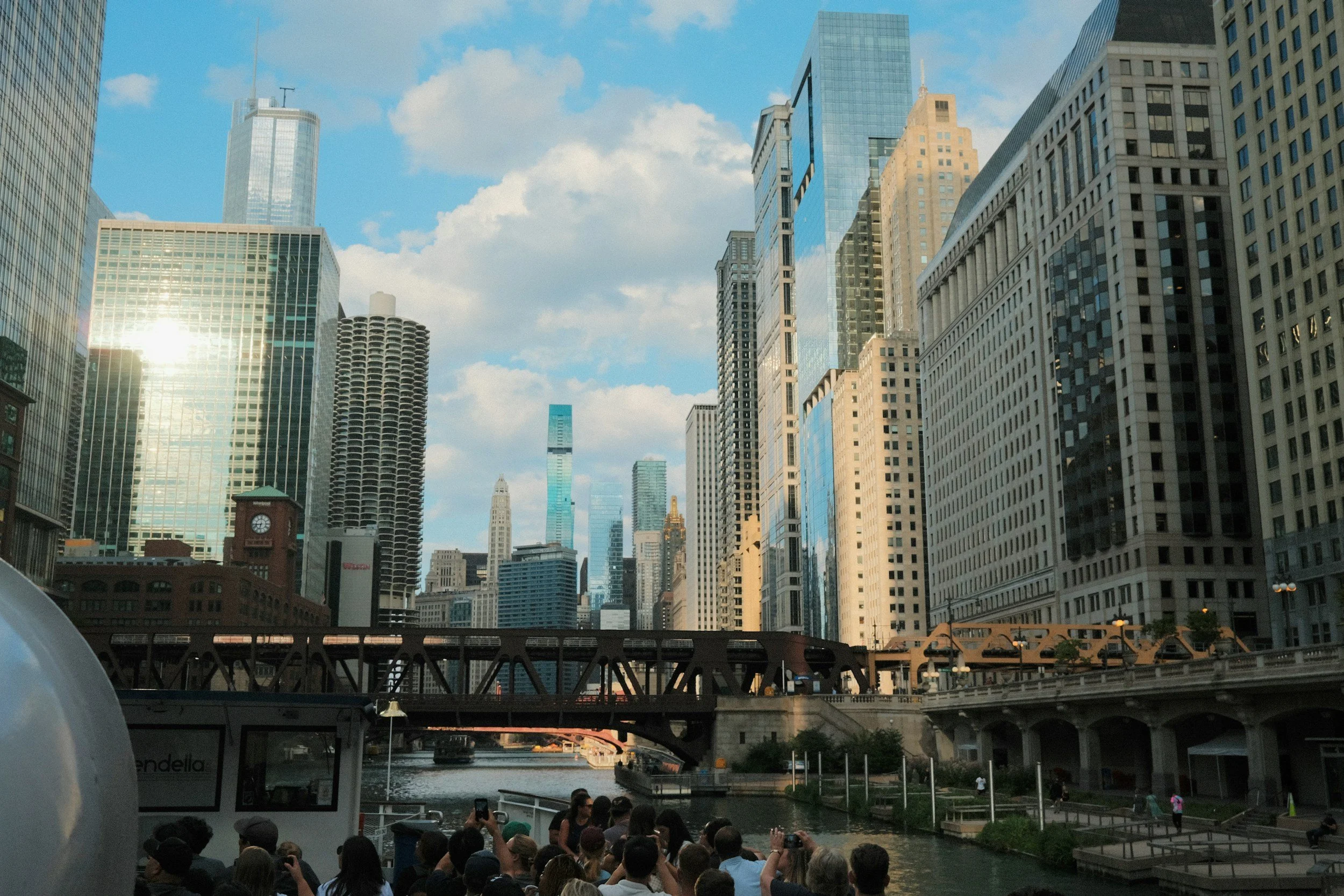
For several years, Chicago's downtown luxury market — the Gold Coast, River North, Streeterville, Lakeshore East — watched buyers migrate north. Lincoln Park, Lakeview, and Wicker Park were absorbing demand, prices on the North Side were rising sharply, and downtown condominiums were sitting longer than their owners expected.

That dynamic has shifted in 2026, and the reasons are worth understanding if you're considering a purchase in either location.

For several years, Chicago's downtown luxury market — the Gold Coast, River North, Streeterville, Lakeshore East — watched buyers migrate north. Lincoln Park, Lakeview, and Wicker Park were absorbing demand, prices on the North Side were rising sharply, and downtown condominiums were sitting longer than their owners expected.

That dynamic has shifted in 2026, and the reasons are worth understanding if you're considering a purchase in either location.

The immediate driver is North Side fatigue. Bidding wars in Lincoln Park have pushed single-family home prices well past asking on a regular basis. Buyers who have made multiple offers and lost have started re-evaluating downtown as the more rational market — where inventory still exists, where competition is warming but not frenzied, and where the price-per-square-foot proposition for a well-located, well-built condominium is genuinely strong.

The secondary driver is the return of out-of-state buyers. Perceptions of downtown Chicago's safety and vibrancy have improved, and buyers from New York, California, and other high-cost markets are rediscovering the Gold Coast specifically as a luxury market that delivers architectural quality, cultural proximity, building amenities, and lakefront access at prices that would be unrecognizable in their home markets.

The result: listing inventory in downtown neighborhoods has shrunk meaningfully through the spring season. Renovated, turnkey units are commanding premiums and moving quickly. Units that need work are also rising in value as buyers accept compromise that they wouldn't have a year ago.


What the buyer needs to understand

Downtown Chicago is a condominium-heavy market, and the distinction between a well-run building and one with deferred maintenance or underfunded reserves is enormous. HOA fees vary dramatically. Special assessments — one-time charges levied when a building needs major capital work — can run tens of thousands of dollars and are not always visible to a buyer who doesn't know to look.

Before making any downtown Chicago condo purchase, review the building's reserve fund study, the most recent HOA meeting minutes, and any pending or recent special assessments. An agent who works downtown regularly knows which buildings have strong financials and which don't — and that knowledge is worth more than the listing description.

John Voirol | John's Agents | Find My Agent


Read More
Illinois, Cities John Voirol | St. Louis REALTOR® Illinois, Cities John Voirol | St. Louis REALTOR®

Chicago's Property Tax Bills Just Hit a 30-Year High. What Every Buyer Needs to Know.

If you're buying in Chicago, the property tax number in the listing is not your property tax number. That distinction has always been true in Cook County. In 2025 and 2026, it matters more than it ever has.

Here is what happened. The Cook County Assessor's Office completed a citywide reassessment of Chicago's residential properties in 2024. The results, which hit tax bills in 2025, were significant: the median residential property tax bill in Chicago jumped 16.7% — the largest single-year increase in Illinois history. For some neighborhoods, the numbers were far more severe. In West Garfield Park, the median homeowner's bill more than doubled, rising from $1,482 to $3,448. In nine predominantly Black Chicago community areas, median residential bills jumped by more than 50%.

If you're buying in Chicago, the property tax number in the listing is not your property tax number. That distinction has always been true in Cook County. In 2025 and 2026, it matters more than it ever has.

Here is what happened. The Cook County Assessor's Office completed a citywide reassessment of Chicago's residential properties in 2024. The results, which hit tax bills in 2025, were significant: the median residential property tax bill in Chicago jumped 16.7% — the largest single-year increase in Illinois history. For some neighborhoods, the numbers were far more severe. In West Garfield Park, the median homeowner's bill more than doubled, rising from $1,482 to $3,448. In nine predominantly Black Chicago community areas, median residential bills jumped by more than 50%.

The mechanism behind the increases is worth understanding. Commercial property values in Chicago — particularly downtown office buildings — have declined sharply as vacancy rates have risen in the post-pandemic environment. As commercial assessments went down, the tax burden shifted. Property taxes are zero-sum within a taxing jurisdiction: when commercial values fall, residential properties absorb a larger share of the levy. The Cook County Treasurer put it plainly: "When you have a vacancy rate in commercial properties the way we do in the city right now, commercial valuations are going to go down. So, who has to pick it up? It's like a scale. If one side goes down, the other goes up."

The Board of Review, which hears property tax appeals, also cut commercial assessments by nearly 20% after the Assessor's initial valuation — while cutting residential assessments by only 1%. That shift alone transferred approximately half a billion dollars of tax burden from commercial properties to homeowners, adding roughly $700 to the average homeowner's bill in Chicago.

What this means for buyers right now

The 2026 reassessment cycle is targeting the southern and western suburbs of Cook County — the first time since the infamous 2023 reassessment that this region will be revalued. That earlier cycle produced some of the largest assessment increases in Cook County history. Homeowners and buyers in those areas should be preparing accordingly.

For buyers purchasing in Chicago proper, the immediate question is: what will your actual tax bill be at your purchase price, under current assessment levels, with the rates that now apply? The historical figure in a listing reflects what the seller paid under potentially different assessed values and different rate conditions. Your bill will be calculated on what you pay, at current rates. The gap between those two numbers can be significant.

The Illinois Department of Revenue is conducting a comprehensive study of the state's property tax system with a report due July 2026. Legislative reform is being discussed seriously for the first time in years. But "being discussed" is not the same as enacted, and buyers purchasing in 2026 should not factor potential reform into their planning.

A knowledgeable local agent will model your expected tax liability on any property before you make an offer. This is not an optional step in Chicago.


John Voirol | John's Agents | Find My Agent


Read More
Relocation, Illinois, Cities John Voirol | St. Louis REALTOR® Relocation, Illinois, Cities John Voirol | St. Louis REALTOR®

Chicago Has 200 Neighborhoods. Here's How to Find the Right One Before You Buy.

The University of Chicago estimates that the city contains more than 200 distinct neighborhoods. Chicago's official designation divides it into 77 community areas. Either way, the number is large enough that "I'm moving to Chicago" tells you almost nothing about where someone is actually going to live, what their daily life will look like, or what their real estate decision will require.

This is not a quirk. It is the defining feature of the Chicago market, and it is the reason that buying in Chicago without specific neighborhood fluency — either your own or your agent's — is a significantly riskier proposition than it looks from the outside.
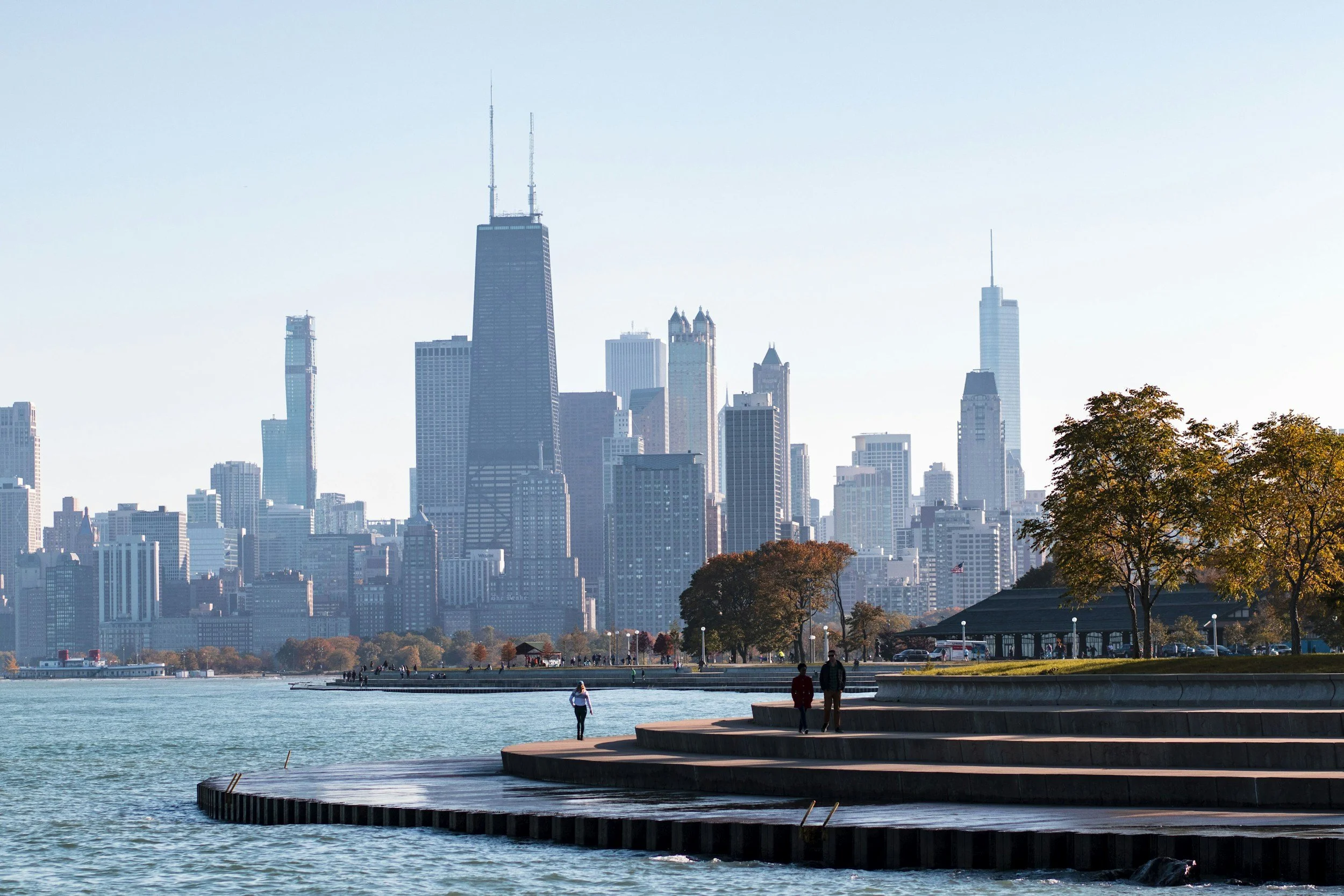
The University of Chicago estimates that the city contains more than 200 distinct neighborhoods. Chicago's official designation divides it into 77 community areas. Either way, the number is large enough that "I'm moving to Chicago" tells you almost nothing about where someone is actually going to live, what their daily life will look like, or what their real estate decision will require.

This is not a quirk. It is the defining feature of the Chicago market, and it is the reason that buying in Chicago without specific neighborhood fluency — either your own or your agent's — is a significantly riskier proposition than it looks from the outside.

Here is the lay of the land for buyers who are starting to think about where they want to land.

The North Side: Established Luxury, Intense Competition

Lincoln Park, Lakeview, and Wicker Park have been the engines of the Chicago residential market for years, and the competition reflects it. Bidding wars in Lincoln Park have pushed closing prices on single-family homes well over asking. In Q4 2025, the Lincoln Park median single-family sale price rose 19.4% year over year to $2,208,888. These are genuinely desirable neighborhoods — tree-lined, walkable, well-served by transit, close to the lakefront — and they carry prices that reflect that fact fully.

Buyers priced out of Lincoln Park have been moving to Lakeview, which has been absorbing some of that demand at slightly lower price points, and to Wicker Park and Bucktown, which offer the character-forward urban experience with somewhat more inventory. The North Side broadly rewards buyers who move efficiently and decisively, which makes working with an agent who knows the micro-level dynamics essential rather than optional.

Downtown and Near-Downtown: The Comeback Story

The Gold Coast, River North, Streeterville, and Lakeshore East spent several years losing residents and volume to the North Side. That dynamic has reversed. Shrinking inventory downtown, the exhaustion of bidding wars further north, and the return of out-of-state buyers who view downtown Chicago as a genuine value are driving a quiet resurgence. Luxury condominiums and penthouses in these neighborhoods are moving again — particularly turnkey, well-presented properties that don't require a project.

For buyers who want full-service building amenities, genuine walkability, proximity to the cultural core, and skyline views, downtown remains one of the best values per square foot of any major American city. The caveat: HOA and assessment structures vary significantly building by building, and due diligence on a building's financials is as important as due diligence on the unit itself.

The West Loop: The City's Fastest Evolved Neighborhood

Ten years ago, the West Loop was a meatpacking district. Today it is one of the most desirable urban neighborhoods in Chicago — Restaurant Row on Randolph Street is legitimate destination dining, the proximity to the Loop and transit is exceptional, and the housing stock includes new construction condominiums alongside adaptive reuse loft buildings that have become the neighborhood's visual identity. Prices have appreciated significantly, but the West Loop still offers a compelling proposition for buyers who want urban intensity with relatively modern housing stock.


Neighborhoods Worth a Second Look

Buyers focused exclusively on the established markets sometimes overlook neighborhoods that offer genuine quality at more accessible price points. Bronzeville on the South Side has a rich architectural heritage, a community of engaged residents, and ongoing investment. The South Loop continues to evolve, with proximity to the museum campus, Soldier Field, and the lakefront available at prices below comparable North Side properties. Logan Square has matured from an emerging neighborhood into an established one, and its relative price advantage over Lincoln Park has narrowed significantly — but value remains relative to what the North Side commands.


The Suburb Question

For buyers with children, the suburb question is often unavoidable. Chicago's public school system, Chicago Public Schools, is large, uneven, and operated by a district that has faced sustained financial and governance challenges. The selective enrollment high schools — Northside College Prep, Walter Payton College Prep, Jones College Prep — are legitimately excellent but are accessible only through a competitive admissions process. The private school landscape is strong, with institutions like Latin School, University of Chicago Lab School, and Francis Parker carrying national reputations.

Families who want consistently strong public schools without the lottery and selective enrollment uncertainty often end up in Evanston, Wilmette, Winnetka, Hinsdale, or Naperville — the North Shore and western suburbs that have anchored family demand for generations. These markets carry premiums that reflect exactly what they offer: strong schools, established communities, and commute access to the city that ranges from excellent to manageable depending on the specific suburb and employer location.

The Chicago market is large enough and varied enough that almost any buyer profile has a neighborhood that fits. The work is knowing which one that is before the search starts — not discovering it mid-transaction.


John Voirol | John's Agents | Find My Agent


Read This Before You Move to Chicago

Read More
Illinois, Cities, Relocation John Voirol | St. Louis REALTOR® Illinois, Cities, Relocation John Voirol | St. Louis REALTOR®

Chicago Is One of the Greatest Cities in the World to Live In. Here's the Unfiltered Picture Before You Buy.

Time Out ranked Chicago among its top 50 best cities in the world in 2026. This is not a surprise to anyone who lives there. It is, however, a useful starting point for people considering a move — because the gap between Chicago's reputation and Chicago's reality is wider than in almost any other major American city, and it cuts in both directions.

The reputation: winter, crime, political dysfunction, property taxes, deep dish pizza. The reality: forty miles of lakefront, world-class architecture, one of the most underrated food cities on the planet, a cultural infrastructure that rivals cities twice its size, and a real estate market that offers a quality of life per dollar that virtually no comparable city in the country can match. Both versions contain truth. The buyers who navigate Chicago well are the ones who hold both simultaneously — who arrive clear-eyed rather than either enchanted or forewarned into paralysis.

This piece is for the person who is seriously considering a move to Chicago, and who wants the complete picture before they start looking at homes.

Time Out ranked Chicago among its top 50 best cities in the world in 2026. This is not a surprise to anyone who lives there. It is, however, a useful starting point for people considering a move — because the gap between Chicago's reputation and Chicago's reality is wider than in almost any other major American city, and it cuts in both directions.

The reputation: winter, crime, political dysfunction, property taxes, deep dish pizza. The reality: forty miles of lakefront, world-class architecture, one of the most underrated food cities on the planet, a cultural infrastructure that rivals cities twice its size, and a real estate market that offers a quality of life per dollar that virtually no comparable city in the country can match. Both versions contain truth. The buyers who navigate Chicago well are the ones who hold both simultaneously — who arrive clear-eyed rather than either enchanted or forewarned into paralysis.

This piece is for the person who is seriously considering a move to Chicago, and who wants the complete picture before they start looking at homes.

The Case for Chicago Is Substantial and Underappreciated

Start with what Chicago actually has, because it's genuinely extraordinary and routinely undersold by people who lead with the weather.

The architecture alone is worth the price of admission. Chicago invented the skyscraper — the 1885 Home Insurance Building is widely credited as the world's first — and the city has been building with ambition and beauty ever since. The skyline from Lake Shore Drive is one of the iconic urban views in the world, and the architecture boat tours along the Chicago River are, without exaggeration, one of the best ways to spend a few hours in any American city. Residents walk past Louis Sullivan buildings on the way to get coffee. This is not a metaphor. It is a daily reality that most Chicagoans take entirely for granted and that people relocating from other cities consistently describe as one of the things they didn't expect to matter so much and then did.

The cultural infrastructure operates at a scale that consistently surprises newcomers. The Art Institute of Chicago is one of the premier art museums in the world — Ferris Bueller was not wrong. The Field Museum rivals the natural history institutions in New York and Washington. Steppenwolf Theatre, founded in 1976 in a church basement, is now one of the most important theatrical institutions in the country, currently in the middle of a $54 million expansion. The Chicago Symphony Orchestra performs in Orchestra Hall, one of the finest acoustic environments in America. The Joffrey Ballet, the Lyric Opera, a comedy scene that has launched more careers than almost any other city in the country — the list is long and it is legitimate.

The food story has fully arrived. Chicago has always had character in its food — the Chicago-style hot dog is a theological conviction, the deep dish debate a civic identity — but the contemporary restaurant scene has grown into something genuinely serious. The city has produced James Beard Award winners year after year, Michelin-starred restaurants in multiple neighborhoods, and a dining culture that reflects the city's extraordinary ethnic diversity. The Polish Village, Pilsen, Chinatown, Greektown, a Vietnamese corridor along Argyle Street — you can eat your way around the world without leaving the city limits, and you can do it at every price point from street food to prix fixe.

The lakefront is one of the most democratic and genuinely stunning urban amenities in the world. Forty miles of coastline, publicly accessible, lined with parks, beaches, trails, and harbors. Grant Park, Millennium Park with the Cloud Gate sculpture that has become shorthand for Chicago itself, Maggie Daley Park, the Museum Campus — these are not destinations you drive to from the city. They are the city. On a summer evening, the lakefront fills with everyone — runners, cyclists, families, dogs, couples — in a way that makes the democratic promise of urban life feel genuinely real.

And the transit system, the CTA's "L," is genuinely excellent by the standards of American cities. The second-largest public transit system in the country, with eleven Metra lines connecting the suburbs to the urban core, and an L system that gets you almost anywhere within the city efficiently. Ninety-one percent of transit users report that they'd recommend CTA services. For buyers moving from car-dependent metros, this alone changes the financial calculus of urban living.

The Honest Complications

Chicago requires honesty about its challenges, because they are real and they affect buyers in ways that matter.

The weather is not a punchline — it is a lifestyle variable. Chicago winters are long, they are genuinely cold, and the wind off the lake is a physical force that makes temperatures feel meaningfully lower than they are. Residents who moved from New York or Boston sometimes report that Chicago winters are comparable; residents who moved from California or the Sun Belt rarely find that framing convincing. November through mid-April is the genuine winter zone, with January, February, and March comprising what can fairly be called a sustained meteorological challenge. This is not a reason not to move to Chicago. It is a reason to buy a home that is well-insulated, situated in a neighborhood you can navigate in winter, and equipped with parking if you need it. It is also a reason to understand that Chicago summers — warm, alive with festivals, open to the lakefront in a way that transforms the city — are among the best of any major city in the world, and that the seasonal rhythm is part of what gives the city its character.

The property tax picture is in genuine crisis. This deserves its own section, and will get one. But the headline is that Cook County homeowners saw an average property tax bill increase of 16.7% in 2025, the largest in Illinois history, with some neighborhoods absorbing increases of 50% or more. The southern and western suburbs are now entering their own reassessment cycle in 2026. The Illinois Department of Revenue is conducting a comprehensive study of the state's property tax system with a report due July 2026. For buyers, the property tax reality in Chicago is not an asterisk. It is a primary variable that belongs in the first conversation about any property.

The neighborhood variation is extreme. This is not unique to Chicago, but it is more pronounced here than in most cities its size. Chicago is officially divided into 77 community areas and contains what the University of Chicago estimates to be more than 200 distinct neighborhoods. The experience of living in Lincoln Park — one of the most affluent and well-appointed neighborhoods in the Midwest — is genuinely different from living in Pilsen or Wicker Park or the South Loop, not just financially but culturally, logistically, and in terms of daily life. Buyers who move to "Chicago" without knowing which Chicago they're moving to are making a significant decision with incomplete information.


The Market in 2026: What Buyers Are Actually Navigating

Chicago's real estate market in 2026 is defined by something relatively rare in major American cities: genuine value at the high end.

The March 2026 median sale price in Chicago hit $410,100 — up 5.2% year over year, moving faster than the national average of roughly 1.4%. Homes are going pending in 16 days on average and attracting an average of three offers. Price per square foot reached $293. These are the numbers of a healthy, active market — not a frenzy, not a distress — operating at a pace that rewards prepared buyers and punishes unprepared ones.

The luxury market tells a particularly interesting story. Downtown neighborhoods — Gold Coast, River North, Streeterville, Lakeshore East — spent years losing ground to the North Side as buyers flocked to Lincoln Park, Lakeview, and Wicker Park. That dynamic is shifting. Inventory downtown has shrunk, bidding wars on the North Side have pushed some buyers toward downtown as the more rational option, and out-of-state buyers and returning Chicago residents are rediscovering the Gold Coast for turnkey properties. A home that sat on Bellevue Place in the Gold Coast from 2023 until early 2026 sold for $3.6 million within a month of being re-staged and re-listed — the market didn't need a price cut, it needed a presentation. That is a very specific signal about what the luxury buyer in downtown Chicago is looking for right now.

Compared to peer cities, Chicago remains a striking value. The median sale price here is significantly below San Francisco, New York, Los Angeles, and even Miami and Austin. The architectural quality, the cultural density, the transit access, and the lakefront access available at Chicago price points would cost dramatically more in any of those markets. For high-net-worth buyers relocating from coastal cities, this is not a consolation prize. It is a genuine financial advantage that the city's own residents sometimes take for granted.


The LGBTQ+ Picture: One of the Best in the Country

For LGBTQ+ buyers, Illinois and Chicago specifically represent one of the most legally and culturally protective environments in the United States.

Illinois added sexual orientation as a protected class under the Illinois Human Rights Act in 2005 and gender identity in 2006 — years before most states moved in this direction and well before federal protections were clarified. The Illinois Human Rights Act prohibits discrimination in housing, employment, education, and public accommodations based on sexual orientation and gender identity. These are not aspirational policies. They are enforceable state law.

The Illinois Department of Human Rights has been proactive in expanding protections further in recent years, adding source of income protections in housing, immigration status protections in housing, and regulations on artificial intelligence in employment decisions — areas where other states have not yet acted. The Chicago Teachers Union voted overwhelmingly in April 2025 to protect and defend LGBTQ+ rights and inclusion within schools.

At the federal level, the current political environment has created uncertainty around some protections. Illinois state law, importantly, provides a floor that exists independent of federal policy shifts. For buyers considering relocation and evaluating their legal standing in a new state, Illinois is among the most favorable environments in the country.


What Serious Buyers Need to Know Before They Look

Chicago is a neighborhood-driven market. The phrase is used so often that it loses meaning, but it is more literally true here than almost anywhere. Buyers who succeed in Chicago are the ones who know before they start touring which neighborhoods match their actual daily life — their commute, their walkability preference, their school needs, their social context, their price point — and who work with agents who have genuine expertise in those specific areas rather than general city familiarity.

The Gold Coast and Lincoln Park buyer is not the same buyer as the West Loop or Wicker Park buyer, and they should not be working with the same agent. These are different markets, different property types, different dynamics. An agent who dominates River North condominiums may be a generalist in Lincoln Park single-family homes. Understanding this distinction — and asking for it specifically — is one of the most consequential things a relocating buyer can do before they start making offers.

The property tax variable belongs in every financial conversation about a Chicago purchase. The tax bill in the listing is not your tax bill. Ask for the current assessment, understand which triennial cycle the property falls under, and model the realistic bill at today's market price before you fall in love with a number that won't hold.

And verify everything about neighborhoods directly — not through listing descriptions, not through general reputation, but through firsthand visits at different times of day and week, conversations with residents, and the specific knowledge of an agent who works there regularly.

This is the matching I do. Not connecting buyers with any Chicago agent, but finding the right one — the person who knows your specific target neighborhood at the price point you're buying, who can walk you through the tax picture before you're in contract, and who understands the micro-level details that the listing page will never include.

If you're considering Chicago and want that introduction before you start looking, reach out.


John Voirol | John's Agents | Find My Agent


More on Moving to Chicago

Read More
Illinois, Cities John Voirol | St. Louis REALTOR® Illinois, Cities John Voirol | St. Louis REALTOR®

Chicago Offers Something Almost No Other Major City Can: World-Class Urban Life at a Sane Price

The March 2026 median sale price in Chicago was $410,100. In San Francisco, the comparable figure is well above $1.3 million. In New York, the Manhattan median is over $1 million. In Los Angeles, the median sits north of $900,000.

Chicago has forty miles of publicly accessible lakefront. One of the top art museums in the world. A transit system that lets you live car-free. Architecture that other cities study. A food scene that has fully arrived. Steppenwolf Theatre. The Chicago Symphony Orchestra. Lollapalooza. The Cubs.

And the median sale price is $410,000.

The March 2026 median sale price in Chicago was $410,100. In San Francisco, the comparable figure is well above $1.3 million. In New York, the Manhattan median is over $1 million. In Los Angeles, the median sits north of $900,000.

Chicago has forty miles of publicly accessible lakefront. One of the top art museums in the world. A transit system that lets you live car-free. Architecture that other cities study. A food scene that has fully arrived. Steppenwolf Theatre. The Chicago Symphony Orchestra. Lollapalooza. The Cubs.

And the median sale price is $410,000.

There is an argument — and it is not a weak one — that Chicago is the best value proposition in major American urban real estate. The case against it is well known: the winters, the property tax complexity, the political dysfunction, the city's long-standing challenges with violent crime in specific neighborhoods. These are real things that deserve honest consideration.

But buyers relocating from coastal markets, doing the math on what their equity buys in Chicago versus what it bought at home, consistently arrive at the same conclusion: the gap between what Chicago offers and what it costs is wider than almost anywhere else in the country.

That gap has a way of closing over time. It usually does in cities that are genuinely good places to live.


John Voirol | John's Agents | Find My Agent


More on Moving to Chicago

Read More
Tennessee, Cities John Voirol | St. Louis REALTOR® Tennessee, Cities John Voirol | St. Louis REALTOR®

The Nashville School District Question Is More Complicated Than You Think — Here's How to Get It Right

Before you make an offer on a home in Nashville, before you fall in love with a street or a floor plan or a backyard, there is a question that should come first if you have school-age children: what school does this address actually feed into?

Not what school the neighborhood is known for. Not what a listing agent suggests. Not what a local Facebook group says. What school this specific address, on this specific street, feeds into — verified directly through Metro Nashville Public Schools before you are emotionally committed to a property.

This matters more in Nashville than in almost any other major city in the country. Here's why.


Before you make an offer on a home in Nashville, before you fall in love with a street or a floor plan or a backyard, there is a question that should come first if you have school-age children: what school does this address actually feed into?

Not what school the neighborhood is known for. Not what a listing agent suggests. Not what a local Facebook group says. What school this specific address, on this specific street, feeds into — verified directly through Metro Nashville Public Schools before you are emotionally committed to a property.

This matters more in Nashville than in almost any other major city in the country. Here's why.


Nashville Doesn't Have a Simple School System. It Has Several Layered on Top of Each Other.

Most cities have a relatively straightforward public school structure: you live in a district, you go to the school in that district. Nashville has that — and then it has a system of optional schools, magnet programs, charter networks, priority zones, and lottery-based admissions running on top of it simultaneously. For a family moving from out of state, the vocabulary alone can be disorienting before you've even started looking at houses.

Every home in Davidson County has a guaranteed "zoned school" based on its street address. If you move in, you are automatically assigned a seat there. However, MNPS also runs "Optional Schools," which include magnet schools and charter schools. These require an application and seats are often assigned via a lottery system because demand exceeds capacity.

On top of that, some addresses have what are called "Zoned Options," meaning you might have the choice between your close-proximity neighborhood school and a school slightly further away that the district provides transportation to, often to balance diversity or enrollment numbers.

And then there are Geographic Priority Zones — GPZs — which add another layer entirely. Geographic Priority Zones show which schools participating in the school options process provide enrollment preference to students living in defined geographic areas. Admission from a GPZ is not guaranteed and is based on available space. In other words, living within a GPZ improves your lottery odds without guaranteeing a seat. Your address affects your probability, not your certainty.

Understanding which of these categories applies to any given address is not optional research. It is the research.


The Rezoning Picture Is Actively Shifting — And Buyers Need to Know It

Nashville's school boundary map is not static. Metro Nashville Public Schools has been implementing significant rezoning under its ReimaginED initiative, and the changes going into effect for the 2026-27 school year are the most consequential in recent memory — and came with a legal fight that only recently resolved.

LEAD Public Schools filed a lawsuit against MNPS in January 2025 regarding a rezoning plan, claiming the decision by the MNPS School Board made LEAD Cameron Middle School a choice school instead of a zoned school. A temporary injunction was issued in February 2025, pausing the district's zoning changes that affected the Glencliff cluster.

In January 2026, a Davidson County Chancery Court lifted the injunction, allowing MNPS to move forward with its board-approved plan. Students at John B. Whitsitt, Glenview, and Fall-Hamilton elementary schools will now be zoned to attend Margaret Allen Middle School for the 2026-27 school year.

The underlying legal matter between MNPS and LEAD Public Schools regarding the interpretation of a 2021 charter renewal agreement remains under review. But the practical result for families in the Glencliff cluster is a changed middle school assignment — one that was uncertain until January 2026 and could still be subject to further legal developments.

This is the environment buyers are operating in. School zone assignments that seemed settled a year ago were in legal dispute. New elementary schools — Percy Priest Elementary opened in August 2025, Paragon Mills Elementary also opened as part of the rezoning plan — have reshuffled feeder patterns in parts of the city. MNPS has seen significant enrollment growth, leading to near or overcapacity in several schools, and the numbers are projected to increase in the next two years. That growth pressure means rezoning is not a one-time event. It is an ongoing process.

The practical takeaway: a school zone assignment that was accurate when a home was last listed may not be accurate today. Always verify the specific school zone for a property address using the official MNPS Zone Finder tool. Real estate listings can sometimes be outdated or incorrect, and boundary lines can shift.


The Magnet School Question: Real Opportunity, Real Risk

For buyers who understand how it works, Nashville's magnet school system is a genuine asset — a collection of specialized public programs that, in some cases, rival private school quality. For buyers who don't understand it, it can become a planning disaster.

MNPS magnet offerings include programs like Stratton Elementary International Baccalaureate and Dual Language Magnet, Paragon Mills Elementary Dual Language Magnet, Rosebank STEAM Magnet Elementary, Richard H. Dinkins Middle Early College Magnet, Isaiah T. Creswell Middle Magnet School of the Visual and Performing Arts, and Martin Luther King Jr. for grades 7-12.

At the high school level, Hume-Fogg Academic High School and Martin Luther King Jr. Academic Magnet are the crown jewels of the MNPS system — consistently ranked among the best public high schools in the state and in national comparisons. These schools, though competitive to enter, provide a world-class education for those living within the Davidson County school zone.

The risk that buyers consistently underestimate: magnet admission is not guaranteed by address, by merit alone, or by anything except the outcome of a competitive application and, for many programs, a lottery. Nashville's magnet schools offer strong academic programs — but admission is competitive and not guaranteed. Families who build their plans around magnet admission sometimes find themselves without a seat, scrambling for alternatives at the last minute.

The Optional Schools application window usually opens in late January. If the school has academic requirements like Hume-Fogg, you will need to submit records; otherwise it is a straight lottery system.

What this means practically for a relocating buyer: if your school plan depends on magnet admission, your housing decision should not be made on the assumption that plan will work out. Buy in a zone with a solid zoned school, and treat magnet admission as a welcome bonus if it materializes — not as the load-bearing pillar of your education strategy.

There is also a transportation reality worth understanding. In most cases, school bus transportation is not provided to out-of-zone students attending optional schools. If your child wins a lottery seat at a magnet school in East Nashville but you live in West Nashville, you are responsible for getting them there every day. In a city where traffic on corridors like Harding Pike and Hillsboro Pike can add fifteen to twenty minutes to a commute, this is not a minor consideration.


The Davidson vs. Williamson Question

The most common debate among families buying in the Nashville metro isn't about which neighborhood to live in. It's about which county.

Many buyers choose to look at living in Brentwood or Franklin specifically for the Williamson County School system. Schools like Brentwood High and Ravenwood High are frequently ranked in the top five in the state and compete with Nashville's private schools in terms of college prep reputation. The trade-off is often the commute and the home price. Moving to Williamson County generally means a longer drive if you work in downtown Nashville, and the entry-level price for a single-family home is steep.

The data on this price premium is striking. In Brentwood — where a single zip code, 37027, spans both Davidson and Williamson Counties — the Williamson County side carries a median sale price of $1,563,500, while the Davidson County side, zoned for Metro Nashville Public Schools, has a median of $641,000. That is a gap of more than $900,000 for homes in the same zip code, driven almost entirely by which school system a property falls under.

Williamson County Schools is ranked the fourth-best school district in Tennessee by Niche in 2026 and among the top school districts in the Southeast. Brentwood High School is ranked #5 in Tennessee and #462 nationally out of 20,162 public high schools. Ravenwood High School is ranked #3 in Tennessee.

For buyers whose primary goal is the most consistently high-performing public school system in the region with the least complexity and lottery uncertainty, Williamson County delivers that — at a price that reflects it. Families relocating from states like California, New York, Illinois, and New Jersey are often shocked by the quality and consistency of the education here.

For buyers who want to stay within Davidson County — either because of proximity to downtown, neighborhood character, or price point — the picture is more variable but not without strong options. The key is understanding which MNPS zones are genuinely strong and which require supplemental planning.


The Hidden Cost Calculation Nobody Does Before They Buy

Buyers evaluating the Davidson vs. Williamson question often do an incomplete financial analysis. They compare home prices in each county and stop there. The full calculation is more nuanced.

When MNPS class sizes of 25-30+ students make personalized attention structurally impossible, many families turn to private tutoring at $40-$100+ per hour. A student receiving two hours of weekly tutoring spends $3,200-$8,000 per year. Add SAT/ACT prep courses, learning specialists, or enrichment programs, and the supplemental education budget can approach a significant portion of private school tuition. Homes in Williamson County's top school zones typically cost $100,000-$300,000+ more than comparable homes in Davidson County.

In other words: a buyer who purchases in a lower-rated MNPS zone at a $200,000 discount relative to a comparable Williamson County home, then spends $8,000 to $15,000 per year on supplemental tutoring, enrichment, and test prep for multiple children, may not be saving as much as the purchase price difference suggests. The Williamson County premium, amortized over a decade of education, sometimes pencils out differently than it appears on the surface.

This is not an argument for one county over the other. It is an argument for running the complete calculation before you decide.


The Private School Option and What It Means for Your Home Search

Nashville's private school ecosystem is one of the most robust in the South, and for buyers whose children will attend private school regardless of where they land, the public school zone becomes largely irrelevant to their home search — which opens up the full Davidson County market without the Williamson County premium.

The flagship institutions are well established. Montgomery Bell Academy is the premier all-boys school in the Southeast. Harpeth Hall is the leading all-girls school in Middle Tennessee. Ensworth is widely considered the most prestigious coed private school in the state. Battle Ground Academy in Franklin offers strong college prep in Williamson County. Brentwood Academy combines academic rigor with a faith-based environment.

For buyers who have already decided on private school, the relevant research shifts from school zone to commute. The line of cars for private school drop-offs on major arteries like Harding Pike and Hillsboro Pike can add 15-20 minutes to a commute, so it's wise to drive your potential route during school hours before making an offer. A home that looks ideally located on a map can add forty minutes to a daily routine when school traffic is factored in.


The Buyer's Checklist: How to Actually Navigate This

If you're relocating to Nashville with school-age children, here is the sequence that protects you.

Step one: Verify every address through the MNPS Zone Finder. Not through a listing description, not through your agent's general knowledge of the area, not through what the neighborhood is known for. The Zone Finder at mnps.org is the authoritative source, and boundary lines shift. Use it for every address you're seriously considering.

Step two: Identify whether your target schools use priority zones or lottery admissions. If the school you want is an optional school, magnet, or charter, understand the admission process before you make a housing decision contingent on attending it. Know when the Optional Schools application window opens — historically late January — and what the requirements are.

Step three: Research the feeder pattern all the way through high school. Your child's elementary school feeds into a middle school which feeds into a high school. In Nashville, those feeder patterns are not always obvious, and recent rezoning has shifted some of them. A great elementary school zone that feeds into a weaker middle school is a different proposition than a seamless K-12 pathway.

Step four: If Williamson County is your target, verify the county on every Brentwood address. The 37027 zip code spans both Davidson and Williamson Counties. The county a property sits in determines the school system, the tax rate, and the price. Do not assume a Brentwood address is Williamson County. Verify it.

Step five: Have a backup plan for magnet applications. If optional schools are part of your education strategy, make sure your zoned school is one you could live with if the lottery doesn't go your way. The families who plan around magnet admission exclusively are the ones who find themselves in difficult positions.

Step six: Work with an agent who knows this terrain at a granular level. School zone knowledge in Nashville is not something you can approximate from general market familiarity. The agent you work with should be able to tell you, without looking it up, which side of a given street falls into which school zone — and should know which zones have been recently affected by the ReimaginED rezoning initiative.

This is precisely the kind of local expertise I vet for when I match buyers with Nashville agents. The school question is too consequential to leave to someone who knows the city generally but not specifically.

If you're relocating to Nashville with children and want an introduction to an agent with genuine school zone fluency in your target area, reach out. That conversation is what I'm here for.


John Voirol | John's Agents | Find My Agent


Sources:


Keep Reading about Moving to Nashville


Read More
Cities, Tennessee John Voirol | St. Louis REALTOR® Cities, Tennessee John Voirol | St. Louis REALTOR®

Ninety People Move to Nashville Every Day. Here's Why That Matters to You as a Buyer.

Ninety people move to Nashville every single day. Not a week — a day. That figure has been consistent enough across enough independent data sources that it's stopped being surprising to people who follow the city closely. It should still be surprising to people who are about to buy there.

Ninety people move to Nashville every single day. Not a week — a day. That figure has been consistent enough across enough independent data sources that it's stopped being surprising to people who follow the city closely. It should still be surprising to people who are about to buy there.

Here's why it matters practically: a city absorbing that rate of in-migration, in a market where new construction is being constrained by both tariff-driven cost increases and limited buildable land in the most desirable areas, is a market with structural upward pressure on prices that doesn't resolve quickly. The demand side isn't slowing down. The supply side is constrained. That combination has historically been one of the more reliable predictors of sustained appreciation.

It also means the neighbor you buy next to today may have moved there three years ago from San Francisco, and the neighbor who buys next to you may arrive from New York next year. Nashville's character is being shaped in real time by a wave of high-earning, sophisticated buyers who are choosing it deliberately — and that, more than any single market statistic, is what the long-term value proposition of buying there rests on.

John Voirol | John's Agents | Find My Agent


John Voirol is a licensed real estate professional with more than a decade of experience and over $100M in career sales who leverages this insider knowledge to connect buyers and sellers with the right agent in markets across the country.


Keep Reading About Moving to Nashville

Read More
Cities, Relocation, Tennessee John Voirol | St. Louis REALTOR® Cities, Relocation, Tennessee John Voirol | St. Louis REALTOR®

Nashville Is the City Everyone Is Moving To. Here's the Complete Picture Before You Buy.

There is a statistic about Nashville that sounds made up until you see it corroborated by enough sources that you stop doubting it: roughly ninety people move to Nashville every single day. Not per week. Per day. That's not a real estate marketing claim — it's drawn from moving company data, census estimates, and regional planning reports that have been tracking this influx for years. The Nashville-Davidson-Murfreesboro-Franklin MSA reached approximately 2.1 million residents as of the 2023 Census estimate, and at peak migration years the region was absorbing thirty to forty thousand net new residents annually.

For a city of that size, that's a seismic shift.

The question for anyone considering a move to Nashville isn't whether the city is growing. That part is settled. The question is what all of this growth means for the person buying property there — what you're walking into, what you're betting on, and what the honest version of Nashville looks like when you remove the brochure.

That's what this piece is for.

There is a statistic about Nashville that sounds made up until you see it corroborated by enough sources that you stop doubting it: roughly ninety people move to Nashville every single day. Not per week. Per day. That's not a real estate marketing claim — it's drawn from moving company data, census estimates, and regional planning reports that have been tracking this influx for years. The Nashville-Davidson-Murfreesboro-Franklin MSA reached approximately 2.1 million residents as of the 2023 Census estimate, and at peak migration years the region was absorbing thirty to forty thousand net new residents annually.

For a city of that size, that's a seismic shift.

The question for anyone considering a move to Nashville isn't whether the city is growing. That part is settled. The question is what all of this growth means for the person buying property there — what you're walking into, what you're betting on, and what the honest version of Nashville looks like when you remove the brochure.

That's what this piece is for.

Why They Come

The inbound migration story has several distinct threads, and understanding which one applies to you matters.

The largest driver is employment. Nashville's economy is anchored by healthcare and technology, with HCA Healthcare — one of the largest hospital systems in the country — headquartered downtown and Amazon maintaining a significant and growing footprint. Oracle is currently preparing to break ground on its future headquarters at Nashville's River North development, a project that when finished will include up to thirteen buildings, a pedestrian bridge connecting to the historic Germantown neighborhood, and space for 8,500 employees. These are not speculative announcements. The construction is beginning. The employees will follow.

The second thread is the remote worker — and Nashville caught this wave early and well. A 2026 migration report found that 26% of recent movers to Nashville work remotely for companies based elsewhere, and another 19% work hybrid schedules with occasional travel to offices in other cities. These buyers come predominantly from higher-cost markets — California, New York, Illinois — and they're choosing Nashville for what a real estate agent with Compass described plainly as "cosmopolitan amenities, no state income tax, and a rich culture that doesn't sacrifice space or soul." They're not compromising. They're upgrading.

The third thread is the affluent lifestyle buyer — the couple in their late forties or fifties who has spent twenty years in a high-cost coastal city, accumulated equity, and decided that the square footage they could afford in Nashville, the pace of life, and the genuine cultural scene was worth trading the zip code they'd outgrown. These buyers tend to land in Belle Meade, Green Hills, Brentwood, or Franklin — Nashville's established luxury neighborhoods — or in the newer high-rise developments in The Gulch and the emerging Nashville Yards.

What all three groups have in common is that they're bringing capital, sophistication, and expectations into a market that is evolving to meet them. That combination is what makes Nashville genuinely interesting — and what makes the buying decision significantly more complex than it looks from the outside.

The Lifestyle Case, Honestly Made

Nashville's cultural identity has matured considerably beyond the honky-tonk-and-bachelor-party reputation that defined its national image a decade ago. That scene still exists and still thrives, but it occupies one corridor of a city that has grown considerably more layered.

The culinary scene is legitimate. Nashville now features fine-dining destinations and elevated restaurant experiences that rival those found in major metropolitan hubs — a development that would have been difficult to predict fifteen years ago. The arts and cultural infrastructure has grown alongside it: Cheekwood Estate and Gardens, the Frist Art Museum, a symphony, a vibrant theater community, and a live music ecosystem that extends well beyond Broadway into intimate venues like the Bluebird Cafe, where songwriters perform original work in a room that seats fewer than a hundred people. It's one of those experiences that people describe as singular regardless of how much music they've been exposed to in other cities.

The outdoor life is real and underappreciated by people who picture Nashville as purely urban. Percy Priest Lake is twenty minutes from downtown. Radnor Lake State Park sits inside the city limits. The greenway trail system is expanding. The surrounding Tennessee landscape — rolling hills, dramatic seasons, genuinely beautiful countryside — is accessible in a way that neither coastal California nor the urban Northeast offers.

And then there's the sense of community, which is harder to quantify but consistently cited by people who have relocated there. Nashville has a warmth that doesn't feel performed — a willingness to welcome newcomers that is partly cultural, partly a function of a city that has been absorbing new arrivals for long enough that transplants are the norm rather than the exception. More than a quarter of recent movers work remotely from Nashville for companies based elsewhere. That demographic tends to be younger, well-compensated, and focused on quality of life. They're building lives there, not just residing there temporarily.


The City That Is Being Built Right Now

The most consequential thing happening in Nashville real estate right now isn't a neighborhood price trend. It's a 550-acre redevelopment project that will reshape the city's urban core for the next thirty years.

The East Bank of the Cumberland River — currently comprised mostly of surface parking lots, industrial uses, and the existing Nissan Stadium — is being transformed into what city planners are calling a second downtown. The project, known as Imagine East Bank, is nearly ten times the size of Nashville's Gulch neighborhood. At its center is a $2.1 billion enclosed stadium for the Tennessee Titans, currently under construction and scheduled to open in spring 2027. Surrounding the stadium, a master developer agreement with The Fallon Company covers the first thirty acres of Metro-owned land, with the full development plan encompassing parks and greenways along the river, a new home for the Tennessee Performing Arts Center, affordable housing, a mobility hub, and the Music City Mile — a raised, pedestrian-oriented thoroughfare lined with retail connecting neighborhoods without vehicle traffic.

The scale of what is being built is difficult to fully absorb. When the Oracle campus breaks ground at River North — directly adjacent to the East Bank development area — the combined investment in this corridor of the city will represent one of the largest concentrations of urban development capital in the country. The Fallon Company's portion alone is a $3+ billion project breaking ground in 2026.

For buyers, this creates a specific kind of opportunity that deserves careful thought. Properties purchased in proximity to this development today are being purchased before the full value of what's being built is reflected in pricing. The East Bank itself is still largely industrial. The neighborhoods immediately adjacent — East Nashville, Germantown — are already established and appreciated. But the full effect of transforming 550 acres into a mixed-use second downtown will take years to fully price into the surrounding real estate, and the buyers who understand what's being built now will be better positioned than those who discover it later.

What You Need to Know Before You Buy: Three Things That Surprise People

The property tax situation is more complicated than it looks.

Davidson County completed a major property reappraisal in 2025, and the results were significant: the county-wide median value increase was 45% since the last reappraisal four years earlier. This alone would have generated higher tax bills, but the Metro Council also voted to increase tax rates above the revenue-neutral level — by 26% for the Urban Services District and 39% for the General Services District. The combined effect was substantial enough to generate a record number of appeals: more than 15,000, with 7,270 formal appeal hearings still scheduled into November 2026.

For a buyer relocating to Nashville, this matters in a specific way. Tennessee has no state income tax, which is a genuine and significant financial advantage that draws many buyers. But the property tax picture has changed materially, and the number you see in a listing's tax history may not reflect what you will actually pay — particularly on a home that was purchased and assessed at a price considerably below current market value. Understanding what your actual tax burden will be, at the price you pay, in the specific district you're buying in, is a conversation to have before you make an offer. Davidson County is moving to a three-year reassessment cycle starting in 2028, meaning another reappraisal is not far away.

The school picture requires address-level research.

Metro Nashville Public Schools governs public education across all of Davidson County, serving approximately eighty to eighty-five thousand students across more than 160 schools. School zoning is address-specific — not neighborhood-wide. That means you cannot assume a school assignment based on a general area reputation. Two homes on the same block can sometimes be in different school zones. If schools are a factor in your decision — and for many relocating buyers, they are the primary factor — this is a detail to verify directly through MNPS for every address you're seriously considering, not something to infer from the neighborhood's general reputation.


The LGBTQ+ legislative environment deserves honest attention.

Nashville's city culture skews progressive and inclusive — the city itself has a long history of welcoming LGBTQ+ residents and professionals, and its arts, hospitality, and healthcare communities reflect that openness in practice. But Nashville exists within Tennessee, and Tennessee's state legislature has moved in a very different direction.

In 2025, the Tennessee General Assembly passed the Dismantling DEI Departments Act, which bars state agencies, local governments, and public colleges and universities from promoting diversity, equity, and inclusion efforts and dissolves the state's Human Rights Commission. Responsibility for investigating discrimination claims by state agencies was transferred to the Tennessee Attorney General's Office. Housing and employment remain central concerns for LGBTQ+ residents at the state level, and while comprehensive nondiscrimination protections have not passed, advocacy groups continue to push for clearer language. Some proposed bills would limit how local governments enforce inclusive policies, while others focus on religious exemptions that could affect housing access.

For LGBTQ+ buyers considering Nashville, the practical reality is layered: the city-level experience tends to be welcoming, the creative and professional communities are generally inclusive, and the real estate market is not overtly hostile. But the state-level legislative environment is real, it is evolving, and it belongs in an honest picture of what buying in Tennessee means today. The outcome of housing-related legislation at the state level can influence lending practices, rental policies, and the enforcement of fair housing protections. Staying informed is not optional — it's part of making a sound decision.

Who Does Well in Nashville

The buyers who get the most out of Nashville tend to share a few characteristics. They've done genuine research on the specific neighborhood they're targeting rather than treating the metro area as interchangeable. They understand that Nashville's micro-markets vary dramatically — the experience of living in Belle Meade, East Nashville, The Gulch, Germantown, Brentwood, and Franklin are meaningfully different from each other in ways that go well beyond price per square foot. They have a clear sense of whether they want urban or suburban, and they know that "Nashville" is a large enough footprint that those two modes of living can coexist in the same metro without overlapping.

They also tend to have an agent who actually knows their target area. Nashville has a large and active real estate community, and the depth of local knowledge varies significantly. The market has been growing fast enough that a lot of agents have volume — but volume in a rising market doesn't necessarily translate to the granular neighborhood fluency that a relocating buyer needs. Knowing which streets in East Nashville are in the flood plain, what the school zone boundaries actually look like in Green Hills, which buildings in The Gulch have strong HOA financials and which don't — these are the details that separate an agent who knows Nashville from one who works Nashville.

This is the gap I exist to close. If you're considering a move to Nashville and want an introduction to the right person before you start touring, that's exactly what I do.

John Voirol | John's Agents | Find My Agent


John Voirol is a licensed real estate professional with more than a decade of experience and over $100M in career sales who leverages this insider knowledge to connect buyers and sellers with the right agent in markets across the country.


Read More
Tennessee, Cities John Voirol | St. Louis REALTOR® Tennessee, Cities John Voirol | St. Louis REALTOR®

Oracle, the Titans, and a "Second Downtown": What Nashville's East Bank Means for Real Estate

If you're considering buying in Nashville and haven't looked closely at the East Bank of the Cumberland River, you're missing the most consequential real estate story in the city right now.

The East Bank — currently comprised mostly of surface parking lots and industrial uses just across the river from downtown — is being transformed through what Nashville's city government has described as a redevelopment project nearly ten times the size of The Gulch, the urban neighborhood that defined Nashville's first wave of high-density luxury development. The centerpiece is a $2.1 billion enclosed stadium for the Tennessee Titans, scheduled to open in spring 2027. Surrounding it is the Imagine East Bank plan: new parks and greenways along the Cumberland River, a new home for the Tennessee Performing Arts Center, affordable housing, a mobility hub, and the Music City Mile — a raised pedestrian thoroughfare connecting neighborhoods without vehicle traffic.

If you're considering buying in Nashville and haven't looked closely at the East Bank of the Cumberland River, you're missing the most consequential real estate story in the city right now.

The East Bank — currently comprised mostly of surface parking lots and industrial uses just across the river from downtown — is being transformed through what Nashville's city government has described as a redevelopment project nearly ten times the size of The Gulch, the urban neighborhood that defined Nashville's first wave of high-density luxury development. The centerpiece is a $2.1 billion enclosed stadium for the Tennessee Titans, scheduled to open in spring 2027. Surrounding it is the Imagine East Bank plan: new parks and greenways along the Cumberland River, a new home for the Tennessee Performing Arts Center, affordable housing, a mobility hub, and the Music City Mile — a raised pedestrian thoroughfare connecting neighborhoods without vehicle traffic.

At the same time, Oracle is preparing to break ground on its future Nashville headquarters at River North, directly adjacent to the East Bank. When complete, the campus will include up to thirteen buildings and a pedestrian bridge to Germantown, with capacity for 8,500 employees. The Fallon Company's East Bank mixed-use development — thirty acres of Metro-owned land covered by a master developer agreement approved by the Metro Council — is a $3+ billion project breaking ground this year.

Why this matters for buyers

Development at this scale takes years to fully reflect in surrounding property values. The neighborhoods closest to the East Bank — Germantown, East Nashville, and the river corridor more broadly — are already established and already appreciated. But the full transformation of 550 acres of previously industrial land into a mixed-use second downtown is still early enough in its execution that buyers who understand what's being built are ahead of buyers who discover it later.

The East Bank is not a speculative bet on a city's future. The money has been committed. The construction is visible. The question is whether you're buying before or after that context is fully priced in.

A knowledgeable local agent will help you understand exactly which properties sit in the path of that value trajectory — and which ones only look like they do.

John Voirol | John's Agents | Find My Agent


Read More
Cities, Tennessee John Voirol | St. Louis REALTOR® Cities, Tennessee John Voirol | St. Louis REALTOR®

Nashville's Property Taxes Just Changed Dramatically. What Buyers Need to Know.

If you're relocating to Nashville and Tennessee's lack of a state income tax is part of your financial calculus — it should be — you need to add a new line item to that math: Davidson County property taxes just went up significantly, and the number in a listing's tax history may not reflect what you'll actually pay.

If you're relocating to Nashville and Tennessee's lack of a state income tax is part of your financial calculus — it should be — you need to add a new line item to that math: Davidson County property taxes just went up significantly, and the number in a listing's tax history may not reflect what you'll actually pay.

Here's what happened. Davidson County completed a property reappraisal in 2025, and the county-wide median value increase was 45% compared to the previous appraisal four years earlier. State law requires Nashville to reset tax rates to revenue-neutral levels after a reappraisal — meaning the city can't collect a windfall just because values went up. But the Metro Council went further, voting to increase rates above the revenue-neutral threshold: 26% above for the Urban Services District and 39% above for the General Services District. The combined effect — higher assessed values plus higher rates — produced tax bills that surprised a significant number of homeowners. More than 15,000 formal appeals were filed, a record number, with hearings scheduled into November 2026.


What this means if you're buying

When you purchase a home in Nashville, your property is assessed based on what you paid. Not on what the previous owner paid. Not on what the 2021 appraisal said. On your purchase price. In a market where prices have risen substantially, a buyer purchasing at today's values may see a tax bill that is considerably higher than what appears in a listing's historical tax data.

Before you build your monthly budget around a Nashville purchase, calculate your expected property tax using Davidson County's current rates and your projected purchase price. The difference between what a long-tenured seller is paying and what you'll pay as a new buyer can be meaningful — particularly in neighborhoods where homes have appreciated sharply.

The good news: Tennessee has a constitutional amendment on the November 2026 ballot that would prohibit state-level property taxes. It doesn't affect county and local rates, which are what most buyers are dealing with, but it signals the political direction on property taxation in Tennessee more broadly.

An agent who knows Nashville will walk you through the tax picture on any property before you're in contract. That's not optional research.


John Voirol | John's Agents | Find My Agent


Read More
Cities, Relocation, Tennessee John Voirol | St. Louis REALTOR® Cities, Relocation, Tennessee John Voirol | St. Louis REALTOR®

Before You Fall in Love With a Nashville Listing, Read This

Nashville is an easy city to fall in love with quickly. The food, the music, the people, the energy of a city that feels like it's in the middle of becoming something significant — it gets into you fast, especially if you've been living somewhere that stopped surprising you years ago.

And then you start looking at homes, and things get complicated.

Nashville is an easy city to fall in love with quickly. The food, the music, the people, the energy of a city that feels like it's in the middle of becoming something significant — it gets into you fast, especially if you've been living somewhere that stopped surprising you years ago.

And then you start looking at homes, and things get complicated.

Not because the market is impenetrable. It isn't. But because Nashville is a city where the micro-markets are so distinct, the school boundaries so address-specific, and the neighborhood trajectories so divergent, that buying with only a general sense of the city is genuinely risky in a way that buying in a more homogeneous market isn't. The couple who moved from San Francisco to "East Nashville" and ended up on a street in a FEMA flood zone because their agent didn't flag it is not an apocryphal story. It happens.

Here is what a sophisticated buyer needs to know before they get emotionally attached to a listing.


Nashville's neighborhoods are not interchangeable.

Belle Meade, Green Hills, Forest Hills, and Oak Hill are old-money Nashville — established luxury, mature landscaping, Southern grace, and price points that reflect decades of sustained demand. These neighborhoods are not going anywhere. They are, by any reasonable metric, about as safe a long-term real estate bet as the city offers.

The Gulch and Nashville Yards are the inverse — high-rise luxury in a newly urban context, more Manhattan than Music City, attracting professionals and empty nesters who want walkability, skyline views, and building amenities. These areas are still evolving, and HOA structures vary significantly. Due diligence on building financials matters here in a way it doesn't in a single-family neighborhood.

East Nashville, Wedgewood-Houston, and The Nations are the artist-and-young-professional markets — trendy, appreciating, and in some pockets, genuinely flood-prone. The Ellington Parkway corridor in particular has areas that flood, and while this information is publicly available, it requires knowing to look for it. A buyer moving from out of state often doesn't know to ask.

Brentwood, Franklin, and the suburban corridor to the south are where families with school-age children tend to land — Williamson County Schools is consistently ranked among the best public school systems in Tennessee, and the communities here are mature, well-resourced, and stable.


The school zone thing is not optional research.

Metro Nashville Public Schools operates across all of Davidson County, and school zoning is address-specific. Not neighborhood-specific. Not zip code-specific. Address-specific. Buyers who assume they're in a certain school zone based on a general area reputation and then discover at closing they're not — that conversation happens, and it is unpleasant. Verify every address directly through MNPS before you make an offer contingent on schools.


Your property tax bill will not look like the seller's.

Davidson County completed a 45% countywide median property reappraisal in 2025, compounded by a Metro Council decision to increase tax rates above the revenue-neutral level. Many existing homeowners are paying significantly more than they were two years ago — but the figure in a listing's tax history may still reflect an older, lower assessment. When you buy at today's market price, your assessed value will reflect that purchase price. Your tax bill will too. Model this in your budget before you fall in love with the monthly payment calculation.


The inspector checklist is different here.

Nashville's housing stock spans mid-century ranches to new suburban construction, and the common findings are specific to the market: aging HVAC systems that have been running hard through humid Tennessee summers, crawl space moisture in certain neighborhoods, deferred roof maintenance on older stock. None of these findings necessarily kill a deal — but they require a buyer who knows to ask the inspector specifically about these items, and a negotiating position prepared to use them if warranted.

All of this is knowable. None of it is available from a listing page.

The reason I spend time on every relocation match understanding exactly which neighborhood a client is targeting — not just which city — is that in a market like Nashville, that distinction changes almost everything about what you need in an agent. A specialist in Belle Meade is a generalist in East Nashville. These are not the same market.

If you're relocating to Nashville and want a warm introduction to the right agent for your specific neighborhood and situation, that conversation is exactly what I'm here for.


John Voirol | John's Agents | Find My Agent


Keep Reading About Moving to Nashville

Read More
Cities, California, Relocation John Voirol | St. Louis REALTOR® Cities, California, Relocation John Voirol | St. Louis REALTOR®

Palm Springs Is One of the Most Compelling Places to Own Property in America. It's Also One of the Most Complicated.

There is a version of Palm Springs that exists in the imagination of almost everyone who has been there. The version with the afternoon light going golden over the San Jacinto Mountains, the pool shimmering behind a wall of bougainvillea, the mid-century rooflines clean against a cloudless sky. It's a powerful image. It's also real — and that's part of what makes this such a complicated city to think about clearly when you're considering whether to own property there.

Because the version in the brochure and the version you'd actually be living in are the same city, which means both are true at once. Palm Springs is genuinely extraordinary. It's also genuinely extreme. The buyers who navigate it best are the ones who can hold both of those things in their head simultaneously — who fall in love with the place without losing sight of what it actually demands.

That's what this piece is for.

A complete picture for buyers who are seriously considering the desert.


There is a version of Palm Springs that exists in the imagination of almost everyone who has been there. The version with the afternoon light going golden over the San Jacinto Mountains, the pool shimmering behind a wall of bougainvillea, the mid-century rooflines clean against a cloudless sky. It's a powerful image. It's also real — and that's part of what makes this such a complicated city to think about clearly when you're considering whether to own property there.

Because the version in the brochure and the version you'd actually be living in are the same city, which means both are true at once. Palm Springs is genuinely extraordinary. It's also genuinely extreme. The buyers who navigate it best are the ones who can hold both of those things in their head simultaneously — who fall in love with the place without losing sight of what it actually demands.

That's what this piece is for.


The Pull Is Real and It Has a Long History

Before we get to the complications, the case for Palm Springs deserves to be made properly — because it's substantial, and it goes deeper than the aesthetics.

Palm Springs became what it is over a century of accumulated meaning. The Agua Caliente Band of Cahuilla Indians inhabited this desert long before the city existed; their tribal lands constitute roughly 18% of what is now the city, and their stewardship of this land is woven into its identity in ways that remain visible today. The modern city began to take shape in the early twentieth century as a health destination — the dry desert air thought to be therapeutic — and by the 1920s and 30s it had become a retreat for wealthy Angelenos looking to disappear from public life.

Hollywood came and changed everything. The studio system at its height exerted suffocating control over performers' public identities, and Palm Springs, just two hours from Los Angeles but entirely outside the reach of the studio fixers, became a kind of safety valve. Stars came here to be themselves. And because being oneself, in that era, often meant being queer in a world that didn't tolerate it, Palm Springs gradually became a refuge for the LGBTQ+ community in a way that shaped its character permanently.

Rock Hudson watered his lawn in tiny short-shorts, waving cheerfully at the celebrity home tour buses as they rolled past. Liberace lived here for 25 years, hosting lavish parties at a compound that reflected every flamboyant dimension of his personality, at a time when that kind of visibility required considerable courage. The architects who gave the city its visual identity — many of them gay men in an era when that fact required careful management — built homes that expressed freedom and openness, glass walls dissolving the line between interior and exterior, indoor spaces flowing into pools and gardens and the vast desert sky.

That legacy didn't dissipate. It deepened. Today it's estimated that roughly half of all Palm Springs residents over the age of 55 identify as LGBTQ+, making it one of the most genuinely queer cities in the United States by population share, not just by reputation. Nearly 40% of the city's total population identifies as LGBTQ+, and the city has formalized what was once informal: Palm Springs has declared itself a sanctuary for drag performers, a political statement aimed squarely at the wave of state-level restrictions spreading across other parts of the country. In February 2025, residents transformed the Arenas District into a scene of fierce resistance and LGBTQ+ activism, with chants of "Love is Love" and "We're not going back" ringing through the crowd. Palm Springs is not a place that tolerates queer life. It was built around it.

For buyers who are part of the LGBTQ+ community, or who simply want to live somewhere that reflects the values of inclusion and visibility, that history isn't just atmosphere. It's infrastructure. It's community organizations, healthcare providers, cultural institutions, and a civic government that has repeatedly chosen to protect and celebrate its LGBTQ+ residents when states elsewhere have moved in the opposite direction.


What the City Has Become

The Palm Springs of today has layered something new and genuinely exciting on top of that historical foundation.

The culinary scene has arrived. James Beard Award-winning chefs Susan Feniger and Mary Sue Milliken opened Alice B, their latest venture, inside Living Out — a luxury retirement community for LGBTQ+ residents that opened in 2023. It is, as one writer put it, not often that you find the hottest new restaurant in town hidden inside a retirement community. But that's the kind of delightful surprise that defines contemporary Palm Springs. The Arenas District, long the heart of the city's LGBTQ+ nightlife, has evolved and expanded. The Uptown Design District has become a serious destination for design-forward retail and dining. And the cultural calendar — Modernism Week in February, the Palm Springs International Film Festival in January, Cinema Diverse in September — has given the city a year-round identity that goes far beyond the pool-and-spa reputation it once leaned on.

The remote work era accelerated something that had been building for years: the arrival of younger, high-earning buyers who don't need to live near a corporate headquarters and who are choosing cities based on quality of life rather than proximity to an office. Palm Springs caught that wave early. The demographic influx from San Francisco, Boston, and Seattle — buyers bringing coastal equity and coastal sophistication into a desert market — has changed what the restaurants serve, what the galleries show, and what the new development looks like. The city's own economic development strategic plan identifies the growth of a local technology ecosystem and the leveraging of remote work trends as key opportunities for the next decade of Palm Springs' development.

All of which is to say: the city is not standing still. The version of Palm Springs you buy into today will be a different and likely more developed version of itself in ten years. That's a meaningful consideration for buyers thinking about long-term value, not just present-day livability.


The Part Nobody Puts in the Brochure

Here is where the honest conversation begins.

Palm Springs is a desert. Not in the romantic, abstract sense — in the literal, thermometer-reading sense. In a typical year around 1990, people in Palm Springs experienced about 7 days above 110°F annually. By 2050, that number is projected to reach an average of 32 days per year above 110°F. Let that sink in for a moment. We are talking about a city where, within the lifetimes of people buying property there today, more than a month of every year will be spent at temperatures that are not merely uncomfortable but genuinely dangerous for extended outdoor exposure.

A climate analysis commissioned by the city found that the number of extreme heat days — defined as days above the threshold at which heat becomes a public health risk — is projected to increase to an average of 28 per year by mid-century, and an average of 50 per year by the end of the century. Fifty days. Nearly two months of every calendar year at temperatures that will keep you indoors, keep your pets inside, and require genuine planning around any outdoor activity.

A long-term Palm Springs resident, speaking to this reality online, put it with the kind of unvarnished clarity that only comes from lived experience: "I've lived here for over 20 years and I honestly believe this place is so hot in the summer that it should be uninhabitable. You NEVER 'get used' to summers, you just learn to live with them. It's ridiculous to walk outside at 10 or 11 pm and be sweating within minutes."

This is not a fringe perspective. It is what year-round residents say when they're being honest.

Now, it's worth noting that a significant portion of Palm Springs buyers are not year-round residents. They're second-home buyers who intend to be in Palm Springs during the fall, winter, and spring — the months when the city is legitimately paradise — and somewhere else entirely during July and August. For those buyers, the heat reality is a manageable consideration, not a dealbreaker. But it is still a consideration that shapes property costs, maintenance realities, and the carrying costs of ownership in ways that deserve careful thought.

The intense heat means higher electricity bills due to constant air conditioning use, which is not a minor line item in a desert property budget. Air conditioning systems in Palm Springs work harder and fail faster than they do in more temperate climates. Pools require more chemical treatment in extreme heat. Landscaping choices are constrained by water availability and temperature. The exterior materials on mid-century homes — many of them architecturally significant and thus difficult or impossible to replace without compromising historical character — deteriorate faster in sustained extreme heat.

And then there's the insurance picture, which has changed dramatically in recent years and which buyers cannot afford to ignore.

---

The Insurance Crisis Is a California Story That Reaches the Desert

California's homeowner insurance market is in the middle of a genuine crisis, and while the headlines have focused on wildfire-devastated communities in Los Angeles and Northern California, the effects ripple across the state — including into the Coachella Valley.

Between 2015 and 2023, there was a 19% reduction in the number of home insurance policies in the highest-risk wildfire areas of California. Since 2019, the number of policies in the highest-risk areas has dropped dramatically, with some of this reduction due to insurers issuing non-renewals — simply declining to renew a policy. State Farm, Allstate, and Farmers have all either paused new policies or exited portions of the California market in recent years, citing wildfire risk and regulatory restrictions that prevented adequate rate increases.

For Palm Springs specifically, about 67% of buildings in Palm Springs are at risk of wildfire, and the risk level for these buildings is classified as very high. About 73% of buildings in Palm Springs are at risk of flooding, and the risk level for these buildings is high. These are striking numbers for a city most buyers associate primarily with sun and pool decks, and they have real implications for what insurance coverage looks like and what it costs.

Several major insurers have paused new policies or non-renewed existing ones in higher-risk regions because of wildfire, inflation, and reinsurance costs. New regulations now allow insurers to use forward-looking catastrophe models in rate-setting for the first time — a major shift that lets insurers pass more reinsurance cost into premiums. When reinsurers look at Southern California, they see wildfire, flood, and mudslide exposures stacked on top of very high property values.

What this means practically for a buyer in Palm Springs is this: before you fall in love with a property and certainly before you make an offer, you need to understand what insurance will actually cost on that specific address, what it covers, and whether standard carriers are willing to write it. Some properties in higher-risk zones will require surplus lines coverage — non-admitted carriers not subject to the same rate regulations as standard insurers, meaning they can price risk aggressively. The California FAIR Plan, the state's insurer of last resort, is an option when nothing else is available, but it is not designed to be a long-term solution, and its financial stability has come under scrutiny as enrollment has surged statewide.

A good local agent will help you navigate this before you're under contract, not after. This is one of the areas where the difference between a specialist and a generalist is most consequential.

The City Is Paying Attention

None of this is to suggest Palm Springs is sleepwalking toward an existential crisis. The city's leadership has been unusually proactive about confronting these realities.

The Palm Springs City Council unanimously adopted a comprehensive 2025-2026 legislative platform covering climate resilience, housing, economic development, and infrastructure. Climate and sustainability goals include expanding electric vehicle infrastructure, reducing utility costs, and advancing air quality and waste reduction initiatives. The city's economic development strategic plan explicitly identifies climate change impacts on water and heat as significant threats, while also naming climate innovation as a key opportunity — with a stated goal of developing cooling and green energy solutions as part of resilient infrastructure investment.

The city has long held a commitment to renewable energy and water efficiency that predates most municipalities' awareness of these issues. Palm Springs has set goals to be a high-efficiency, renewable energy city, and positions itself as a leader in water efficiency and reuse. For buyers, this civic orientation matters: a city government that takes climate risk seriously tends to make infrastructure investments that protect long-term property values more effectively than one that doesn't.

The question is not whether Palm Springs is responding. It is whether the pace and scale of that response can keep up with the rate of change. That's a question no one can answer with certainty, and pretending otherwise would be doing you a disservice.


What a Serious Buyer Needs to Know Before Looking

Pull all of this together and a picture emerges — not of a market to avoid, but of a market that requires informed entry.

The lifestyle case is genuine and durable. The culture, the community, the architecture, the quality of life during nine months of the year, the LGBTQ+ foundation, the food and arts scene, the proximity to Joshua Tree and the San Jacinto Mountains — these are real and they compound over time as the city continues to evolve. People who buy in Palm Springs with their eyes open tend to love it.

The climate reality is not a footnote. It is a primary variable in how you use the property, what it costs to maintain, how you insure it, and what the long-term ownership picture looks like. Understanding this before you buy — not as a reason not to buy, but as context for what you're buying — is the difference between a decision made well and one made on the basis of a photograph.

The insurance market requires specific investigation. Not general awareness — specific investigation. Before you make an offer on any property in Palm Springs, you want to know what insurance will cost at that address, who will write it, and what it covers. This is not something to figure out after you're in contract.

The right agent is a non-negotiable. Palm Springs has a large and active real estate community, but the depth of local knowledge varies enormously. You want an agent who understands the STR permit landscape (as we covered in a separate piece), the insurance environment, the neighborhood-level distinctions, and the city's planning direction. These are not things you can approximate from outside the market.

This is exactly the kind of matchmaking I do — not finding you any agent, but finding you the specific person who knows what they need to know to protect your interests in a market this layered.


A Final Thought

There is a particular kind of buyer who does extraordinarily well in Palm Springs. They came, felt the pull, and instead of either dismissing the complications or pretending they don't exist, they got serious about understanding them. They bought with clarity instead of hope. They found an agent who knew the terrain. And then they spent their winters in one of the most singular places in the United States, having made a decision they're still glad about years later.

That's the outcome this piece is meant to help you achieve — if Palm Springs is right for you.

If you want to talk through what you're considering and whether I can connect you with the right local expert before you start looking, reach out. That conversation is what I'm here for.

John Voirol | John’s Agents | Find My Agent


John Voirol is a licensed real estate professional with 10 years of experience and over $100 million in career sales. He specializes in connecting buyers and sellers with the right agent in markets across the country.


Read More
Cities, California, Relocation John Voirol | St. Louis REALTOR® Cities, California, Relocation John Voirol | St. Louis REALTOR®

Palm Springs Is Having a Moment — Here's What Second-Home Buyers Need to Know

There's a specific kind of person who buys a second home in Palm Springs. They've usually been going there for years. They love the mid-century architecture, the desert light, the food scene, the ability to leave on a Friday afternoon from LAX or SFO and be poolside before sunset. At some point, they stop renting someone else's house and start thinking seriously about owning one.

If that's where you are right now, the market is giving you something it hasn't offered in a while: time to think.

There's a specific kind of person who buys a second home in Palm Springs. They've usually been going there for years. They love the mid-century architecture, the desert light, the food scene, the ability to leave on a Friday afternoon from LAX or SFO and be poolside before sunset. At some point, they stop renting someone else's house and start thinking seriously about owning one.

If that's where you are right now, the market is giving you something it hasn't offered in a while: time to think.

After a frenzied few years of pandemic-era demand and double-digit appreciation, the Greater Palm Springs market has shifted into a more measured pace. The median sale price in the city came in around $650K in early 2026, with homes averaging about 94 days on market — considerably longer than the sprint-or-miss conditions buyers faced in 2022. Inventory is running close to pre-pandemic levels, and the sold-to-list ratio has come down to around 94%, meaning negotiation is back on the table in a real way.

For the right buyer, this is a meaningful window.

What the luxury tier looks like

The overall market statistics don't tell the whole story for second-home buyers shopping at or above $1 million, which is broadly where Palm Springs agents define the luxury segment. The luxury tier operates on its own logic. Cash buyers are dominant, and they're increasingly demanding turnkey condition — renovated, design-forward homes that don't require a project. Properties that meet that standard are still moving at or near asking. Properties that don't are sitting, sometimes considerably, giving buyers room to negotiate.

The Coachella Valley's premier pockets — downtown Palm Springs, the Movie Colony, Deepwell, Twin Palms — command premiums, and architecturally significant homes continue to attract buyers who understand what they're looking at. If you don't have that fluency, and most buyers outside the market don't, the right agent makes an enormous difference.

The short-term rental picture — and why it's more complicated than it looks

If rental income is any part of how you're thinking about this purchase, the STR landscape in Palm Springs deserves careful attention before you run any numbers.

In November 2022, the city passed Ordinance 2075, which established a 20% density cap on short-term rental permits per neighborhood — meaning once 20% of homes in a given neighborhood hold permits, no new standard permits are issued. Several neighborhoods hit that cap immediately. New permits issued since then are also limited to 26 rental contracts per year. (A "contract" is one guest stay, regardless of its length — a two-night booking and a three-week stay each count as one contract.)

Here's what catches buyers off guard: STR permits in Palm Springs are non-transferable. They do not convey when a property sells. If you purchase a home that currently operates as a short-term rental — even one with an older, more favorable permit — you don't inherit that permit. You start the application process fresh as a new permittee, subject to the current 26-contract annual limit and the neighborhood density cap. In neighborhoods already at 20%, that means joining a waitlist with no guaranteed timeline.

The practical implication: rental income projections a seller presents may be based on permit terms you will never actually hold. Before making any assumptions about income potential, verify the permit status for that specific property, confirm whether the neighborhood still has capacity for new permits, and build your financial model on what you — as a new applicant — would actually be allowed to do.

This isn't a reason not to buy in Palm Springs. It's a reason to buy with complete information — guided by an agent who knows this regulatory landscape specifically and can walk you through the permit picture before you're under contract.

Who's buying in Palm Springs right now

Migration data from Redfin tells an interesting story: the buyers most actively searching to move into Palm Springs are coming from San Francisco, Boston, and Seattle — not the Los Angeles drive market that has historically dominated second-home demand in the valley. That's a shift worth noting. It suggests that Palm Springs is increasingly on the radar of high-net-worth buyers from outside California who see it as a lifestyle investment, not just a weekend escape.

For sellers, this broadens the potential buyer pool considerably. For buyers from outside the region, it underscores the value of working with a local specialist who knows both the market and the neighborhoods these buyers tend to target.

What I do for second-home buyers

Whether you're buying in Palm Springs, Rancho Mirage, Indian Wells, or anywhere else in the Coachella Valley, my role is the same: I find you the agent who knows your target area, your price point, and your situation — and I make a warm, personal introduction before you ever have a cold conversation with a stranger. The agent question is one you should never have to answer with a guess.

If Palm Springs is on your radar, let's talk before you start touring.John Voirol | John’s Agents | Find My Agent

---

SOURCES

- Redfin, Palm Springs Housing Market Data, February 2026


Read More