Let’s Move to Chicago Blog

Illinois Has Some of the Strongest LGBTQ+ Housing Protections in the Country. Here's What That Means for Buyers.
For LGBTQ+ buyers evaluating where to put down roots, the legal environment of the state they're buying in is not an abstract consideration. It shapes what protections exist when something goes wrong — in a housing transaction, in a rental, in a workplace. And those protections vary enormously by state.

For LGBTQ+ buyers evaluating where to put down roots, the legal environment of the state they're buying in is not an abstract consideration. It shapes what protections exist when something goes wrong — in a housing transaction, in a rental, in a workplace. And those protections vary enormously by state.
Illinois is among the most protective environments in the country. The Illinois Human Rights Act added sexual orientation as a protected class in 2005 and gender identity in 2006 — years before most states and well before federal protections were clarified. The law prohibits discrimination in housing, employment, education, and public accommodations. These are not aspirational goals. They are enforceable state law, administered by the Illinois Department of Human Rights.
Illinois has continued expanding these protections in recent years, adding source of income protections in housing, immigration status protections in housing, and AI discrimination safeguards in employment. At a moment when federal protections are subject to political volatility, Illinois's state-level framework provides a floor that exists independently of what happens in Washington.
For LGBTQ+ buyers considering Chicago specifically, the city's culture is genuinely and historically welcoming in a way that goes beyond legal protection — the Boystown neighborhood in Lakeview has been a center of LGBTQ+ community life for decades, and the city's arts, hospitality, and professional communities reflect that openness throughout.
John Voirol | John's Agents | Find My Agent
Keep Reading About Moving to Chicago
Downtown Chicago's Luxury Market Is Back. Here's Why — and What It Means for Buyers.
For several years, Chicago's downtown luxury market — the Gold Coast, River North, Streeterville, Lakeshore East — watched buyers migrate north. Lincoln Park, Lakeview, and Wicker Park were absorbing demand, prices on the North Side were rising sharply, and downtown condominiums were sitting longer than their owners expected.
That dynamic has shifted in 2026, and the reasons are worth understanding if you're considering a purchase in either location.
For several years, Chicago's downtown luxury market — the Gold Coast, River North, Streeterville, Lakeshore East — watched buyers migrate north. Lincoln Park, Lakeview, and Wicker Park were absorbing demand, prices on the North Side were rising sharply, and downtown condominiums were sitting longer than their owners expected.
That dynamic has shifted in 2026, and the reasons are worth understanding if you're considering a purchase in either location.
The immediate driver is North Side fatigue. Bidding wars in Lincoln Park have pushed single-family home prices well past asking on a regular basis. Buyers who have made multiple offers and lost have started re-evaluating downtown as the more rational market — where inventory still exists, where competition is warming but not frenzied, and where the price-per-square-foot proposition for a well-located, well-built condominium is genuinely strong.
The secondary driver is the return of out-of-state buyers. Perceptions of downtown Chicago's safety and vibrancy have improved, and buyers from New York, California, and other high-cost markets are rediscovering the Gold Coast specifically as a luxury market that delivers architectural quality, cultural proximity, building amenities, and lakefront access at prices that would be unrecognizable in their home markets.
The result: listing inventory in downtown neighborhoods has shrunk meaningfully through the spring season. Renovated, turnkey units are commanding premiums and moving quickly. Units that need work are also rising in value as buyers accept compromise that they wouldn't have a year ago.
What the buyer needs to understand
Downtown Chicago is a condominium-heavy market, and the distinction between a well-run building and one with deferred maintenance or underfunded reserves is enormous. HOA fees vary dramatically. Special assessments — one-time charges levied when a building needs major capital work — can run tens of thousands of dollars and are not always visible to a buyer who doesn't know to look.
Before making any downtown Chicago condo purchase, review the building's reserve fund study, the most recent HOA meeting minutes, and any pending or recent special assessments. An agent who works downtown regularly knows which buildings have strong financials and which don't — and that knowledge is worth more than the listing description.
John Voirol | John's Agents | Find My Agent
Chicago's Property Tax Bills Just Hit a 30-Year High. What Every Buyer Needs to Know.
If you're buying in Chicago, the property tax number in the listing is not your property tax number. That distinction has always been true in Cook County. In 2025 and 2026, it matters more than it ever has.
Here is what happened. The Cook County Assessor's Office completed a citywide reassessment of Chicago's residential properties in 2024. The results, which hit tax bills in 2025, were significant: the median residential property tax bill in Chicago jumped 16.7% — the largest single-year increase in Illinois history. For some neighborhoods, the numbers were far more severe. In West Garfield Park, the median homeowner's bill more than doubled, rising from $1,482 to $3,448. In nine predominantly Black Chicago community areas, median residential bills jumped by more than 50%.
If you're buying in Chicago, the property tax number in the listing is not your property tax number. That distinction has always been true in Cook County. In 2025 and 2026, it matters more than it ever has.
Here is what happened. The Cook County Assessor's Office completed a citywide reassessment of Chicago's residential properties in 2024. The results, which hit tax bills in 2025, were significant: the median residential property tax bill in Chicago jumped 16.7% — the largest single-year increase in Illinois history. For some neighborhoods, the numbers were far more severe. In West Garfield Park, the median homeowner's bill more than doubled, rising from $1,482 to $3,448. In nine predominantly Black Chicago community areas, median residential bills jumped by more than 50%.
The mechanism behind the increases is worth understanding. Commercial property values in Chicago — particularly downtown office buildings — have declined sharply as vacancy rates have risen in the post-pandemic environment. As commercial assessments went down, the tax burden shifted. Property taxes are zero-sum within a taxing jurisdiction: when commercial values fall, residential properties absorb a larger share of the levy. The Cook County Treasurer put it plainly: "When you have a vacancy rate in commercial properties the way we do in the city right now, commercial valuations are going to go down. So, who has to pick it up? It's like a scale. If one side goes down, the other goes up."
The Board of Review, which hears property tax appeals, also cut commercial assessments by nearly 20% after the Assessor's initial valuation — while cutting residential assessments by only 1%. That shift alone transferred approximately half a billion dollars of tax burden from commercial properties to homeowners, adding roughly $700 to the average homeowner's bill in Chicago.
What this means for buyers right now
The 2026 reassessment cycle is targeting the southern and western suburbs of Cook County — the first time since the infamous 2023 reassessment that this region will be revalued. That earlier cycle produced some of the largest assessment increases in Cook County history. Homeowners and buyers in those areas should be preparing accordingly.
For buyers purchasing in Chicago proper, the immediate question is: what will your actual tax bill be at your purchase price, under current assessment levels, with the rates that now apply? The historical figure in a listing reflects what the seller paid under potentially different assessed values and different rate conditions. Your bill will be calculated on what you pay, at current rates. The gap between those two numbers can be significant.
The Illinois Department of Revenue is conducting a comprehensive study of the state's property tax system with a report due July 2026. Legislative reform is being discussed seriously for the first time in years. But "being discussed" is not the same as enacted, and buyers purchasing in 2026 should not factor potential reform into their planning.
A knowledgeable local agent will model your expected tax liability on any property before you make an offer. This is not an optional step in Chicago.
John Voirol | John's Agents | Find My Agent
SOURCES
- Illinois Answers: Record Property Tax Increases Slam Chicago Homeowners
- O'Connor: 2025 Cook County Property Tax Chaos Recap
- O'Connor: 2026 Cook County Reassessment Targets Western and Southern Suburbs
- WTTW: Cook County Assessor Pushes to Ease Property Tax Burden on Homeowners
- Cook County Treasurer's Office: Property Tax Research
Moving to Chicago?
Chicago Has 200 Neighborhoods. Here's How to Find the Right One Before You Buy.
The University of Chicago estimates that the city contains more than 200 distinct neighborhoods. Chicago's official designation divides it into 77 community areas. Either way, the number is large enough that "I'm moving to Chicago" tells you almost nothing about where someone is actually going to live, what their daily life will look like, or what their real estate decision will require.
This is not a quirk. It is the defining feature of the Chicago market, and it is the reason that buying in Chicago without specific neighborhood fluency — either your own or your agent's — is a significantly riskier proposition than it looks from the outside.
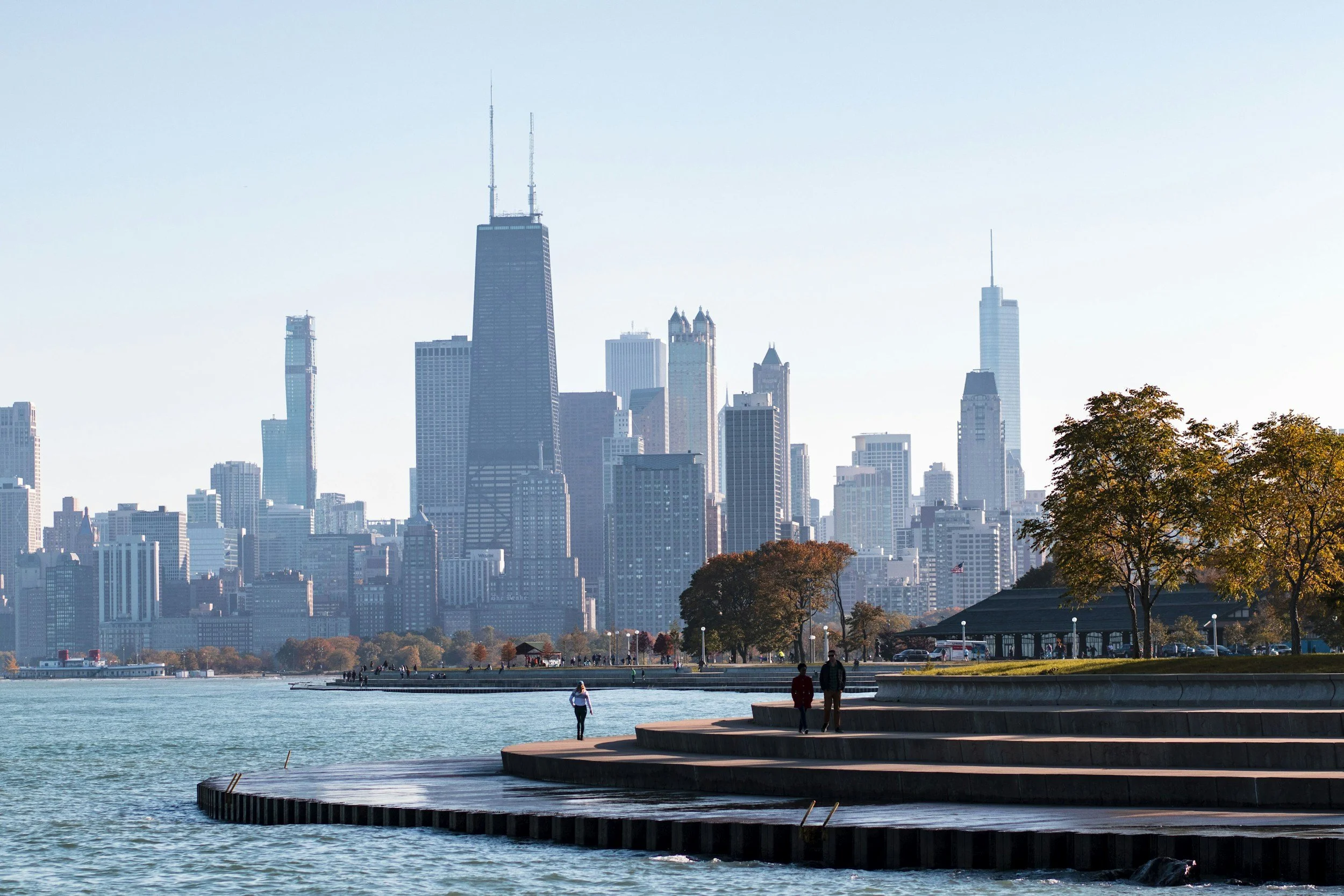
The University of Chicago estimates that the city contains more than 200 distinct neighborhoods. Chicago's official designation divides it into 77 community areas. Either way, the number is large enough that "I'm moving to Chicago" tells you almost nothing about where someone is actually going to live, what their daily life will look like, or what their real estate decision will require.
This is not a quirk. It is the defining feature of the Chicago market, and it is the reason that buying in Chicago without specific neighborhood fluency — either your own or your agent's — is a significantly riskier proposition than it looks from the outside.
Here is the lay of the land for buyers who are starting to think about where they want to land.
The North Side: Established Luxury, Intense Competition
Lincoln Park, Lakeview, and Wicker Park have been the engines of the Chicago residential market for years, and the competition reflects it. Bidding wars in Lincoln Park have pushed closing prices on single-family homes well over asking. In Q4 2025, the Lincoln Park median single-family sale price rose 19.4% year over year to $2,208,888. These are genuinely desirable neighborhoods — tree-lined, walkable, well-served by transit, close to the lakefront — and they carry prices that reflect that fact fully.
Buyers priced out of Lincoln Park have been moving to Lakeview, which has been absorbing some of that demand at slightly lower price points, and to Wicker Park and Bucktown, which offer the character-forward urban experience with somewhat more inventory. The North Side broadly rewards buyers who move efficiently and decisively, which makes working with an agent who knows the micro-level dynamics essential rather than optional.
Downtown and Near-Downtown: The Comeback Story
The Gold Coast, River North, Streeterville, and Lakeshore East spent several years losing residents and volume to the North Side. That dynamic has reversed. Shrinking inventory downtown, the exhaustion of bidding wars further north, and the return of out-of-state buyers who view downtown Chicago as a genuine value are driving a quiet resurgence. Luxury condominiums and penthouses in these neighborhoods are moving again — particularly turnkey, well-presented properties that don't require a project.
For buyers who want full-service building amenities, genuine walkability, proximity to the cultural core, and skyline views, downtown remains one of the best values per square foot of any major American city. The caveat: HOA and assessment structures vary significantly building by building, and due diligence on a building's financials is as important as due diligence on the unit itself.
The West Loop: The City's Fastest Evolved Neighborhood
Ten years ago, the West Loop was a meatpacking district. Today it is one of the most desirable urban neighborhoods in Chicago — Restaurant Row on Randolph Street is legitimate destination dining, the proximity to the Loop and transit is exceptional, and the housing stock includes new construction condominiums alongside adaptive reuse loft buildings that have become the neighborhood's visual identity. Prices have appreciated significantly, but the West Loop still offers a compelling proposition for buyers who want urban intensity with relatively modern housing stock.
Neighborhoods Worth a Second Look
Buyers focused exclusively on the established markets sometimes overlook neighborhoods that offer genuine quality at more accessible price points. Bronzeville on the South Side has a rich architectural heritage, a community of engaged residents, and ongoing investment. The South Loop continues to evolve, with proximity to the museum campus, Soldier Field, and the lakefront available at prices below comparable North Side properties. Logan Square has matured from an emerging neighborhood into an established one, and its relative price advantage over Lincoln Park has narrowed significantly — but value remains relative to what the North Side commands.
The Suburb Question
For buyers with children, the suburb question is often unavoidable. Chicago's public school system, Chicago Public Schools, is large, uneven, and operated by a district that has faced sustained financial and governance challenges. The selective enrollment high schools — Northside College Prep, Walter Payton College Prep, Jones College Prep — are legitimately excellent but are accessible only through a competitive admissions process. The private school landscape is strong, with institutions like Latin School, University of Chicago Lab School, and Francis Parker carrying national reputations.
Families who want consistently strong public schools without the lottery and selective enrollment uncertainty often end up in Evanston, Wilmette, Winnetka, Hinsdale, or Naperville — the North Shore and western suburbs that have anchored family demand for generations. These markets carry premiums that reflect exactly what they offer: strong schools, established communities, and commute access to the city that ranges from excellent to manageable depending on the specific suburb and employer location.
The Chicago market is large enough and varied enough that almost any buyer profile has a neighborhood that fits. The work is knowing which one that is before the search starts — not discovering it mid-transaction.
John Voirol | John's Agents | Find My Agent
Read This Before You Move to Chicago
Chicago Is One of the Greatest Cities in the World to Live In. Here's the Unfiltered Picture Before You Buy.
Time Out ranked Chicago among its top 50 best cities in the world in 2026. This is not a surprise to anyone who lives there. It is, however, a useful starting point for people considering a move — because the gap between Chicago's reputation and Chicago's reality is wider than in almost any other major American city, and it cuts in both directions.
The reputation: winter, crime, political dysfunction, property taxes, deep dish pizza. The reality: forty miles of lakefront, world-class architecture, one of the most underrated food cities on the planet, a cultural infrastructure that rivals cities twice its size, and a real estate market that offers a quality of life per dollar that virtually no comparable city in the country can match. Both versions contain truth. The buyers who navigate Chicago well are the ones who hold both simultaneously — who arrive clear-eyed rather than either enchanted or forewarned into paralysis.
This piece is for the person who is seriously considering a move to Chicago, and who wants the complete picture before they start looking at homes.
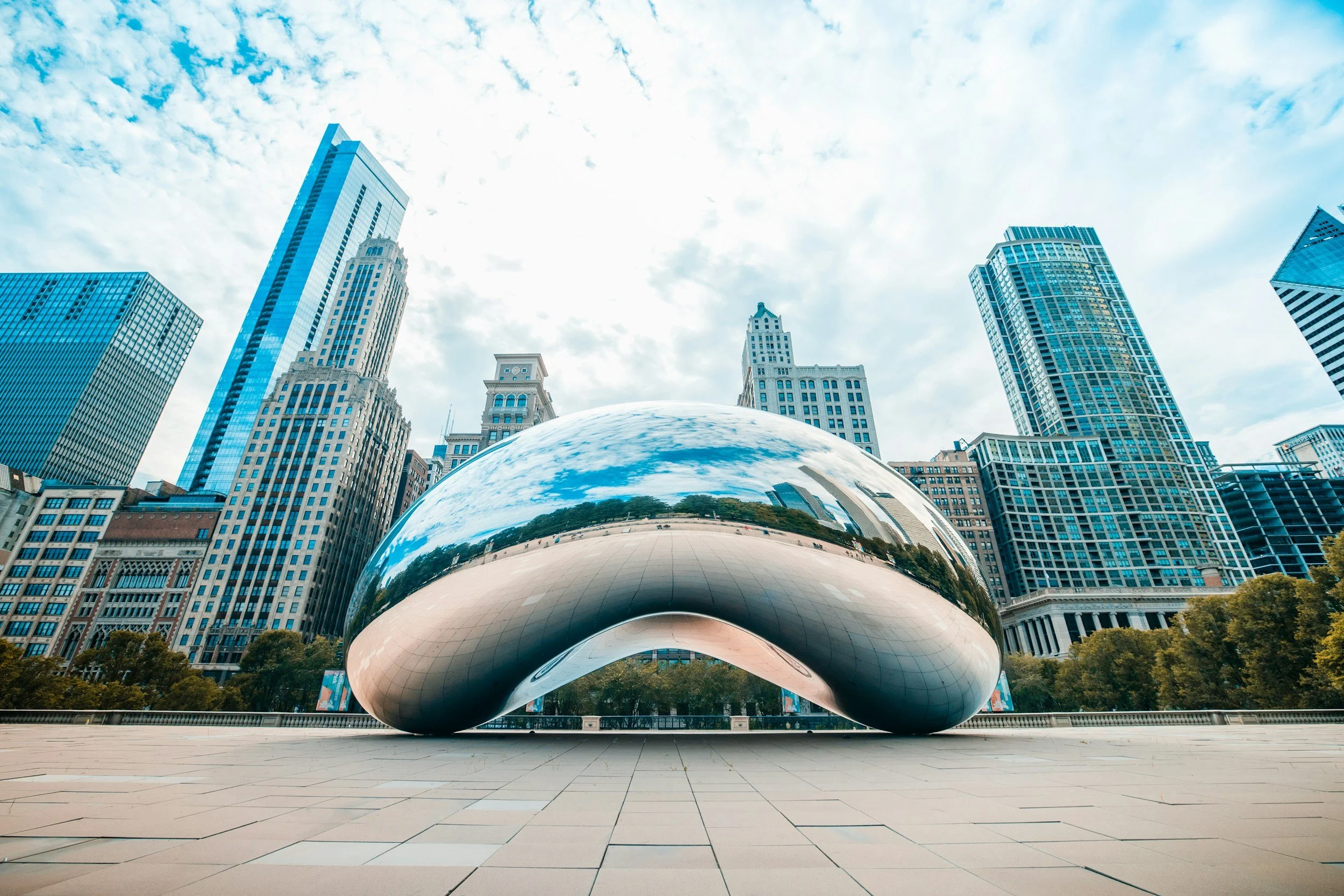
Time Out ranked Chicago among its top 50 best cities in the world in 2026. This is not a surprise to anyone who lives there. It is, however, a useful starting point for people considering a move — because the gap between Chicago's reputation and Chicago's reality is wider than in almost any other major American city, and it cuts in both directions.
The reputation: winter, crime, political dysfunction, property taxes, deep dish pizza. The reality: forty miles of lakefront, world-class architecture, one of the most underrated food cities on the planet, a cultural infrastructure that rivals cities twice its size, and a real estate market that offers a quality of life per dollar that virtually no comparable city in the country can match. Both versions contain truth. The buyers who navigate Chicago well are the ones who hold both simultaneously — who arrive clear-eyed rather than either enchanted or forewarned into paralysis.
This piece is for the person who is seriously considering a move to Chicago, and who wants the complete picture before they start looking at homes.
The Case for Chicago Is Substantial and Underappreciated
Start with what Chicago actually has, because it's genuinely extraordinary and routinely undersold by people who lead with the weather.
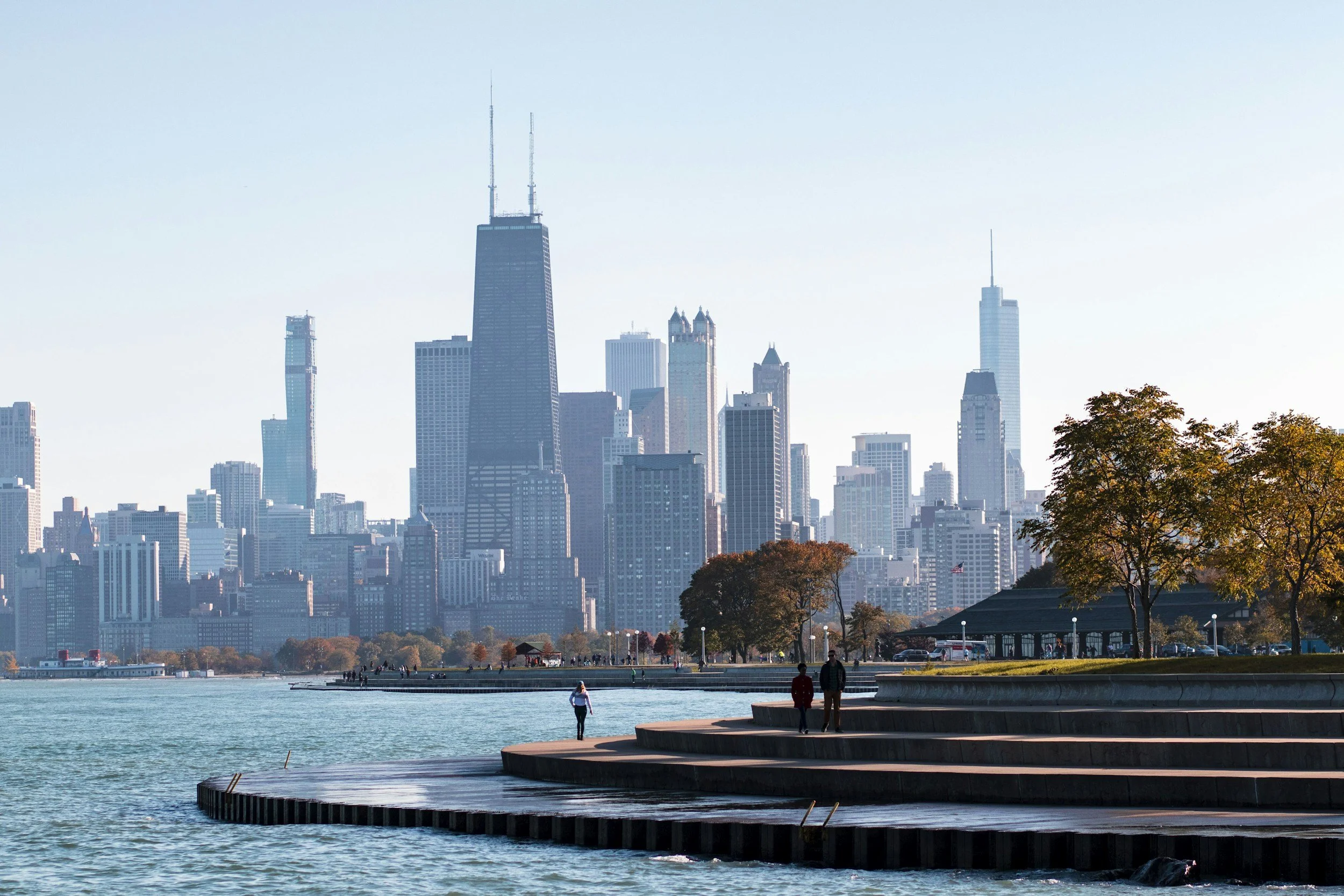
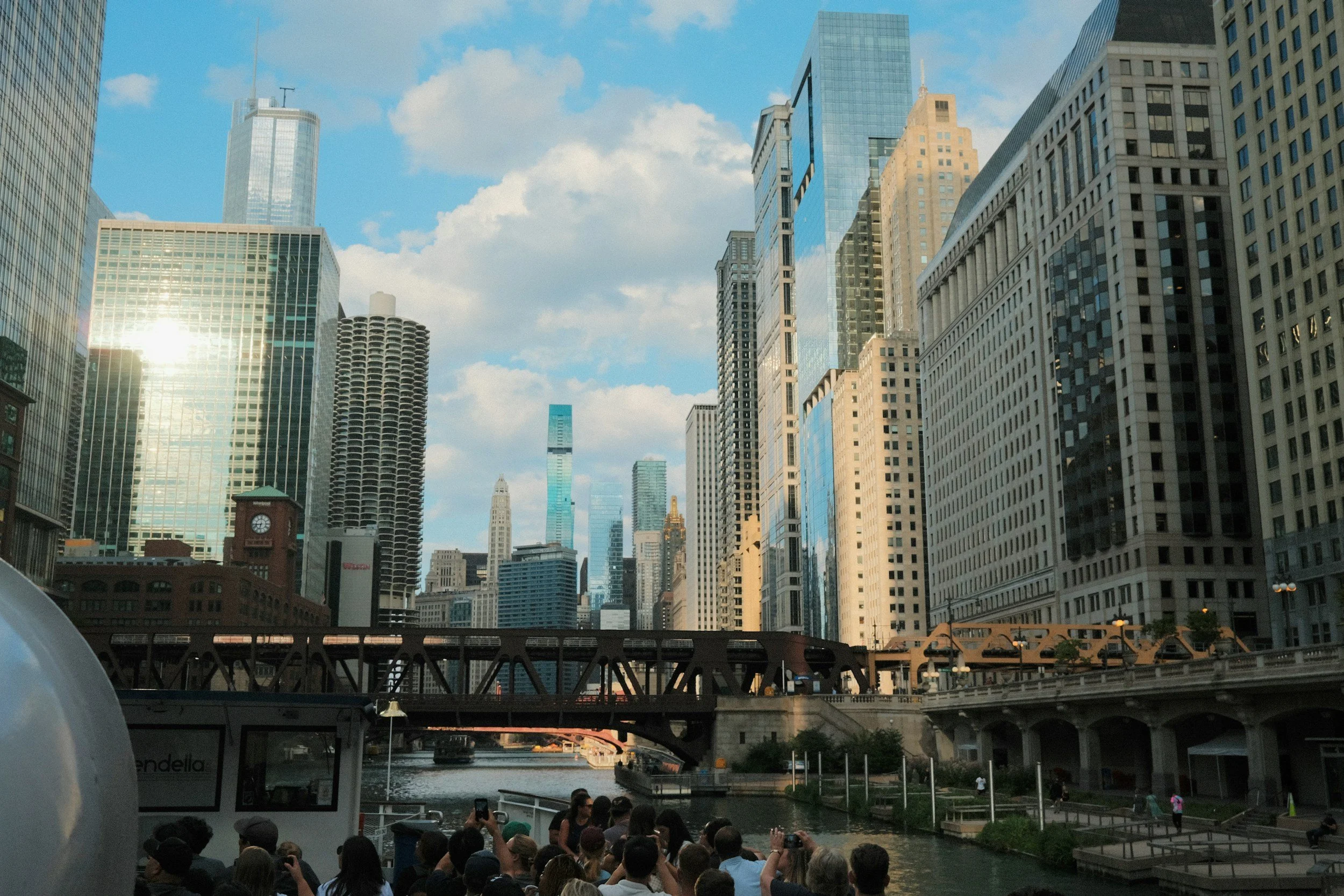
The architecture alone is worth the price of admission. Chicago invented the skyscraper — the 1885 Home Insurance Building is widely credited as the world's first — and the city has been building with ambition and beauty ever since. The skyline from Lake Shore Drive is one of the iconic urban views in the world, and the architecture boat tours along the Chicago River are, without exaggeration, one of the best ways to spend a few hours in any American city. Residents walk past Louis Sullivan buildings on the way to get coffee. This is not a metaphor. It is a daily reality that most Chicagoans take entirely for granted and that people relocating from other cities consistently describe as one of the things they didn't expect to matter so much and then did.
The cultural infrastructure operates at a scale that consistently surprises newcomers. The Art Institute of Chicago is one of the premier art museums in the world — Ferris Bueller was not wrong. The Field Museum rivals the natural history institutions in New York and Washington. Steppenwolf Theatre, founded in 1976 in a church basement, is now one of the most important theatrical institutions in the country, currently in the middle of a $54 million expansion. The Chicago Symphony Orchestra performs in Orchestra Hall, one of the finest acoustic environments in America. The Joffrey Ballet, the Lyric Opera, a comedy scene that has launched more careers than almost any other city in the country — the list is long and it is legitimate.
The food story has fully arrived. Chicago has always had character in its food — the Chicago-style hot dog is a theological conviction, the deep dish debate a civic identity — but the contemporary restaurant scene has grown into something genuinely serious. The city has produced James Beard Award winners year after year, Michelin-starred restaurants in multiple neighborhoods, and a dining culture that reflects the city's extraordinary ethnic diversity. The Polish Village, Pilsen, Chinatown, Greektown, a Vietnamese corridor along Argyle Street — you can eat your way around the world without leaving the city limits, and you can do it at every price point from street food to prix fixe.
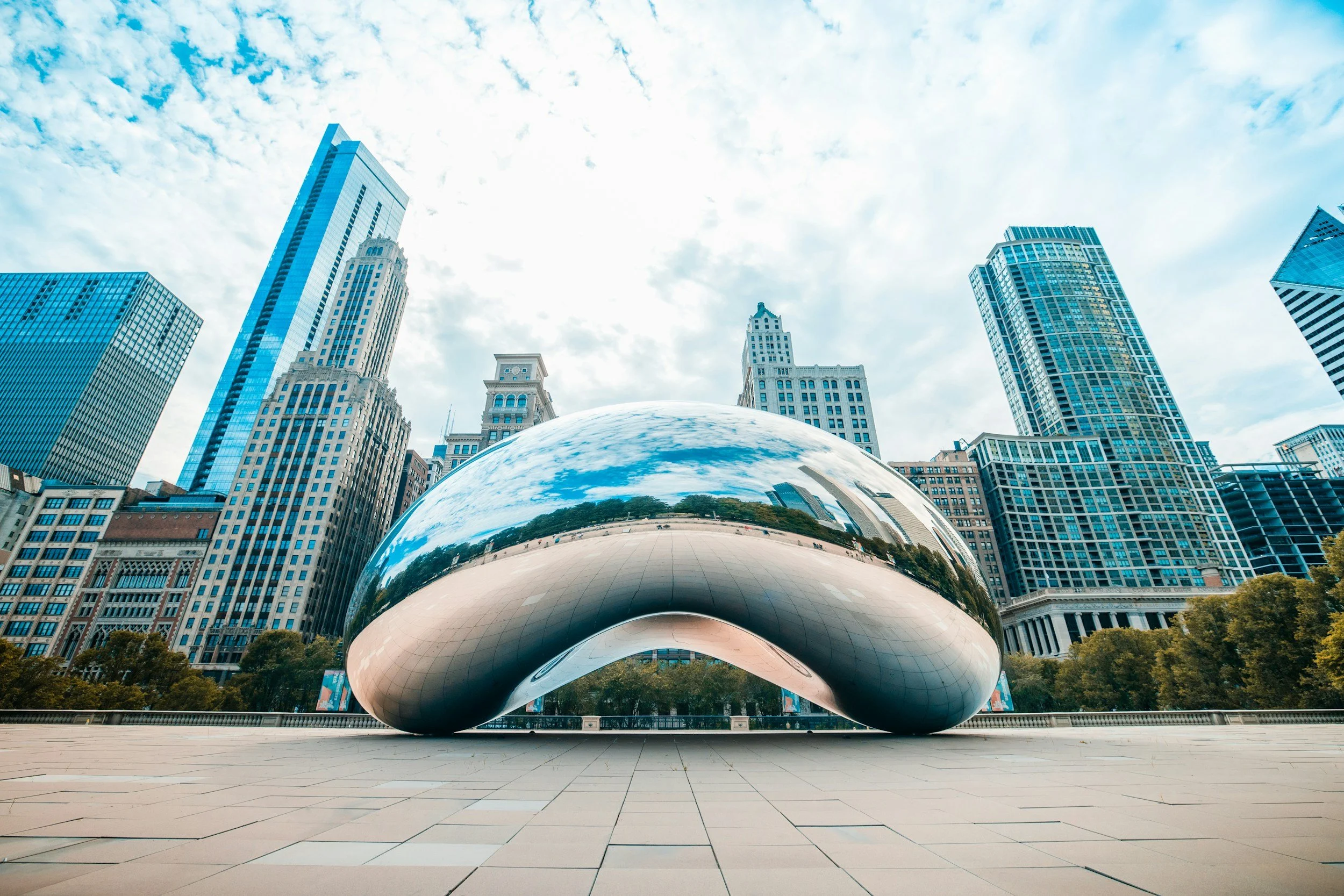
The lakefront is one of the most democratic and genuinely stunning urban amenities in the world. Forty miles of coastline, publicly accessible, lined with parks, beaches, trails, and harbors. Grant Park, Millennium Park with the Cloud Gate sculpture that has become shorthand for Chicago itself, Maggie Daley Park, the Museum Campus — these are not destinations you drive to from the city. They are the city. On a summer evening, the lakefront fills with everyone — runners, cyclists, families, dogs, couples — in a way that makes the democratic promise of urban life feel genuinely real.
And the transit system, the CTA's "L," is genuinely excellent by the standards of American cities. The second-largest public transit system in the country, with eleven Metra lines connecting the suburbs to the urban core, and an L system that gets you almost anywhere within the city efficiently. Ninety-one percent of transit users report that they'd recommend CTA services. For buyers moving from car-dependent metros, this alone changes the financial calculus of urban living.
The Honest Complications
Chicago requires honesty about its challenges, because they are real and they affect buyers in ways that matter.
The weather is not a punchline — it is a lifestyle variable. Chicago winters are long, they are genuinely cold, and the wind off the lake is a physical force that makes temperatures feel meaningfully lower than they are. Residents who moved from New York or Boston sometimes report that Chicago winters are comparable; residents who moved from California or the Sun Belt rarely find that framing convincing. November through mid-April is the genuine winter zone, with January, February, and March comprising what can fairly be called a sustained meteorological challenge. This is not a reason not to move to Chicago. It is a reason to buy a home that is well-insulated, situated in a neighborhood you can navigate in winter, and equipped with parking if you need it. It is also a reason to understand that Chicago summers — warm, alive with festivals, open to the lakefront in a way that transforms the city — are among the best of any major city in the world, and that the seasonal rhythm is part of what gives the city its character.
The property tax picture is in genuine crisis. This deserves its own section, and will get one. But the headline is that Cook County homeowners saw an average property tax bill increase of 16.7% in 2025, the largest in Illinois history, with some neighborhoods absorbing increases of 50% or more. The southern and western suburbs are now entering their own reassessment cycle in 2026. The Illinois Department of Revenue is conducting a comprehensive study of the state's property tax system with a report due July 2026. For buyers, the property tax reality in Chicago is not an asterisk. It is a primary variable that belongs in the first conversation about any property.
The neighborhood variation is extreme. This is not unique to Chicago, but it is more pronounced here than in most cities its size. Chicago is officially divided into 77 community areas and contains what the University of Chicago estimates to be more than 200 distinct neighborhoods. The experience of living in Lincoln Park — one of the most affluent and well-appointed neighborhoods in the Midwest — is genuinely different from living in Pilsen or Wicker Park or the South Loop, not just financially but culturally, logistically, and in terms of daily life. Buyers who move to "Chicago" without knowing which Chicago they're moving to are making a significant decision with incomplete information.
The Market in 2026: What Buyers Are Actually Navigating
Chicago's real estate market in 2026 is defined by something relatively rare in major American cities: genuine value at the high end.
The March 2026 median sale price in Chicago hit $410,100 — up 5.2% year over year, moving faster than the national average of roughly 1.4%. Homes are going pending in 16 days on average and attracting an average of three offers. Price per square foot reached $293. These are the numbers of a healthy, active market — not a frenzy, not a distress — operating at a pace that rewards prepared buyers and punishes unprepared ones.
The luxury market tells a particularly interesting story. Downtown neighborhoods — Gold Coast, River North, Streeterville, Lakeshore East — spent years losing ground to the North Side as buyers flocked to Lincoln Park, Lakeview, and Wicker Park. That dynamic is shifting. Inventory downtown has shrunk, bidding wars on the North Side have pushed some buyers toward downtown as the more rational option, and out-of-state buyers and returning Chicago residents are rediscovering the Gold Coast for turnkey properties. A home that sat on Bellevue Place in the Gold Coast from 2023 until early 2026 sold for $3.6 million within a month of being re-staged and re-listed — the market didn't need a price cut, it needed a presentation. That is a very specific signal about what the luxury buyer in downtown Chicago is looking for right now.
Compared to peer cities, Chicago remains a striking value. The median sale price here is significantly below San Francisco, New York, Los Angeles, and even Miami and Austin. The architectural quality, the cultural density, the transit access, and the lakefront access available at Chicago price points would cost dramatically more in any of those markets. For high-net-worth buyers relocating from coastal cities, this is not a consolation prize. It is a genuine financial advantage that the city's own residents sometimes take for granted.
The LGBTQ+ Picture: One of the Best in the Country
For LGBTQ+ buyers, Illinois and Chicago specifically represent one of the most legally and culturally protective environments in the United States.
Illinois added sexual orientation as a protected class under the Illinois Human Rights Act in 2005 and gender identity in 2006 — years before most states moved in this direction and well before federal protections were clarified. The Illinois Human Rights Act prohibits discrimination in housing, employment, education, and public accommodations based on sexual orientation and gender identity. These are not aspirational policies. They are enforceable state law.
The Illinois Department of Human Rights has been proactive in expanding protections further in recent years, adding source of income protections in housing, immigration status protections in housing, and regulations on artificial intelligence in employment decisions — areas where other states have not yet acted. The Chicago Teachers Union voted overwhelmingly in April 2025 to protect and defend LGBTQ+ rights and inclusion within schools.
At the federal level, the current political environment has created uncertainty around some protections. Illinois state law, importantly, provides a floor that exists independent of federal policy shifts. For buyers considering relocation and evaluating their legal standing in a new state, Illinois is among the most favorable environments in the country.
What Serious Buyers Need to Know Before They Look
Chicago is a neighborhood-driven market. The phrase is used so often that it loses meaning, but it is more literally true here than almost anywhere. Buyers who succeed in Chicago are the ones who know before they start touring which neighborhoods match their actual daily life — their commute, their walkability preference, their school needs, their social context, their price point — and who work with agents who have genuine expertise in those specific areas rather than general city familiarity.
The Gold Coast and Lincoln Park buyer is not the same buyer as the West Loop or Wicker Park buyer, and they should not be working with the same agent. These are different markets, different property types, different dynamics. An agent who dominates River North condominiums may be a generalist in Lincoln Park single-family homes. Understanding this distinction — and asking for it specifically — is one of the most consequential things a relocating buyer can do before they start making offers.
The property tax variable belongs in every financial conversation about a Chicago purchase. The tax bill in the listing is not your tax bill. Ask for the current assessment, understand which triennial cycle the property falls under, and model the realistic bill at today's market price before you fall in love with a number that won't hold.
And verify everything about neighborhoods directly — not through listing descriptions, not through general reputation, but through firsthand visits at different times of day and week, conversations with residents, and the specific knowledge of an agent who works there regularly.
This is the matching I do. Not connecting buyers with any Chicago agent, but finding the right one — the person who knows your specific target neighborhood at the price point you're buying, who can walk you through the tax picture before you're in contract, and who understands the micro-level details that the listing page will never include.
If you're considering Chicago and want that introduction before you start looking, reach out.
John Voirol | John's Agents | Find My Agent
SOURCES
Time Out: Top 50 Best Cities in the World 2026
United States Real Estate Investor: Chicago Home Prices Surge 5x Nation
The Real Deal Chicago: Downtown Chicago Housing Market Bouncing Back
Illinois Answers: Record Property Tax Increases Slam Chicago Homeowners
O'Connor: 2026 Cook County Reassessment Targets Western and Southern Suburbs
Illinois Department of Human Rights: Legislative Updates
TaskForce Chicago: Transgender Rights in Illinois
HOMEiA: 7 Key Factors to Know About Living in Chicago
More on Moving to Chicago
Chicago Offers Something Almost No Other Major City Can: World-Class Urban Life at a Sane Price
The March 2026 median sale price in Chicago was $410,100. In San Francisco, the comparable figure is well above $1.3 million. In New York, the Manhattan median is over $1 million. In Los Angeles, the median sits north of $900,000.
Chicago has forty miles of publicly accessible lakefront. One of the top art museums in the world. A transit system that lets you live car-free. Architecture that other cities study. A food scene that has fully arrived. Steppenwolf Theatre. The Chicago Symphony Orchestra. Lollapalooza. The Cubs.
And the median sale price is $410,000.
The March 2026 median sale price in Chicago was $410,100. In San Francisco, the comparable figure is well above $1.3 million. In New York, the Manhattan median is over $1 million. In Los Angeles, the median sits north of $900,000.
Chicago has forty miles of publicly accessible lakefront. One of the top art museums in the world. A transit system that lets you live car-free. Architecture that other cities study. A food scene that has fully arrived. Steppenwolf Theatre. The Chicago Symphony Orchestra. Lollapalooza. The Cubs.
And the median sale price is $410,000.
There is an argument — and it is not a weak one — that Chicago is the best value proposition in major American urban real estate. The case against it is well known: the winters, the property tax complexity, the political dysfunction, the city's long-standing challenges with violent crime in specific neighborhoods. These are real things that deserve honest consideration.
But buyers relocating from coastal markets, doing the math on what their equity buys in Chicago versus what it bought at home, consistently arrive at the same conclusion: the gap between what Chicago offers and what it costs is wider than almost anywhere else in the country.
That gap has a way of closing over time. It usually does in cities that are genuinely good places to live.
John Voirol | John's Agents | Find My Agent
More on Moving to Chicago