Moving to Miami? It’s Now a Global City. Here’s What You Need to Know.
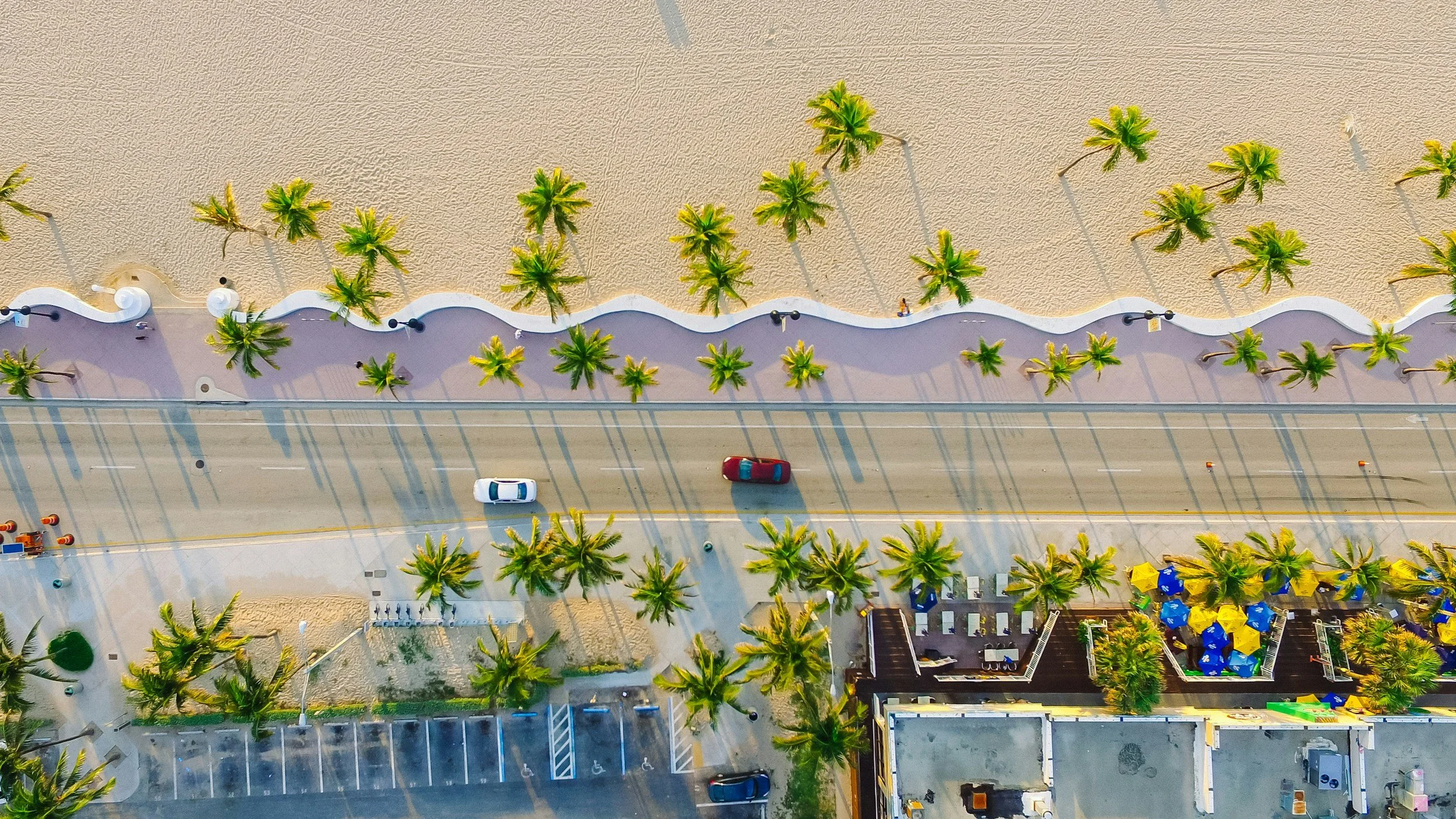
The U.S. Census Bureau confirmed it: Miami is now the number two destination in the United States for international migration. Not the number two city people are moving to from Texas or California. The number two destination for people arriving from other countries entirely — ahead of cities three and four times its size, absorbing wealth, capital, and ambition from Latin America, Europe, and the Middle East in volumes that would have seemed implausible fifteen years ago.
This is not a real estate marketing claim. It is a structural shift in how global wealth thinks about where to live.
The pandemic accelerated something that had been building for years: the legitimization of Miami as a primary residence for people who could live anywhere in the world. Hedge funds moved their headquarters from Manhattan. Tech founders landed and stayed. Private equity firms opened offices. The financial and professional infrastructure that followed turned a perception into a reality — Miami is no longer a vacation city with a real estate market attached. It is a global city with a real estate market to match.
For buyers considering a move there, this is important context. The city you would be buying into in 2026 is materially different from the one that existed a decade ago. So is the decision.
What Makes Miami Compelling — Genuinely
Start with the fundamentals, because they are more substantial than the lifestyle marketing would suggest.
Florida has no state income tax. For a high earner relocating from California, New York, or Illinois, this is not a marginal benefit. It is a meaningful annual financial shift that compounds over time and changes the math of a move significantly. Combined with a business-friendly regulatory environment and the absence of estate and inheritance taxes, Florida's tax structure has been one of the most powerful engines of the wealth migration story.
The weather, which tends to be mentioned early and dismissed as obvious, is more consequential than it sounds. Miami has a genuine outdoor lifestyle twelve months a year — not in the aspirational sense that gets applied to cities with four distinct seasons, but literally. The bay, the beaches, the boating culture, the outdoor dining year-round — these are not features you visit. They are features you build your daily life around. For people arriving from northern climates, this reconfiguration of daily life is routinely described as transformative in ways they didn't fully anticipate before moving.
The cultural infrastructure has matured significantly. Art Basel Miami Beach has made the city an international arts destination for two weeks in December that no longer feels like a visiting circus but an embedded part of the city's identity. Wynwood, which fifteen years ago was a warehouse district, is now a global destination for street art, design, hospitality, and increasingly luxury residential development. The Adrienne Arsht Center for the Performing Arts is one of the great performance venues in the Southeast. The dining scene, driven by the city's extraordinary Latin American cultural influence and the international buyers and visitors who have arrived in waves, now operates at a level of genuine sophistication that extends well beyond South Beach's theatrical restaurants into neighborhoods like Coconut Grove, Coral Gables, and Brickell.
The cultural diversity is not just present in Miami — it is the city's identity. More than 70% of Miami-Dade County residents are Hispanic or Latino. The city is functionally bilingual in English and Spanish, and its connections to Latin American business, culture, and family networks are structural, not incidental. For buyers from Latin America, this creates a specific kind of belonging that few American cities can offer. For buyers from elsewhere, it creates a richness of cultural experience that is genuinely unlike anything available in the Sun Belt markets that have absorbed so much inbound migration in recent years.
The Market in 2026: Where It Stands
Miami's real estate market in 2026 has entered what most observers describe as a more mature cycle — not the frenzy of 2021-2023, but not a retreat either. It is a bifurcated market in which outcomes are determined almost entirely by location, building quality, and price point rather than the broad tailwinds that lifted every segment during the pandemic era.
At the top end, the luxury market has not softened. Combined sales of properties priced above one million dollars surged more than 21% year-over-year in January 2026. South Florida recorded its highest-ever number of $20 million-plus condo transactions in 2025, alongside near-record activity in the $10 million tier. Cash buyers account for 44% of January closings — well above the national average of around 27%. The prevalence of cash buyers from international markets and domestic migration creates a competitive dynamic that buyers using financing need to understand before they start making offers.
At the broader market level, single-family homes in Miami-Dade trade for approximately $640,000 to $650,000, while condo prices average around $420,000. These numbers reflect a more balanced environment than in recent years — inventory has increased, homes are taking approximately 90 to 105 days to sell, and sellers in most segments are negotiating in ways they were not two years ago. Buyers have more time and more leverage than at any point since 2020.
The neighborhood picture is essential. Miami is not one market. Coral Gables, Coconut Grove, Miami Beach, Brickell, Edgewater, Wynwood, and the broader Miami-Dade suburban landscape each operate under their own supply, demand, and buyer profile conditions. Coral Gables, for instance — with its Mediterranean Revival architecture, tree-lined streets, and proximity to top private schools and the University of Miami — is seeing homes in the $3 million to $6 million range absorbed in roughly two months, with price reductions becoming less common. Ultra-luxury properties above $10 million often sell within four months. Inventory is historically low. This is not a market where buyers have leverage. Brickell, Miami's financial hub, is a different story — with 17 months of supply and listings averaging 113 days on market, the Brickell condo buyer has negotiating room that buyers in Coral Gables simply don't.
Understanding which neighborhood you're actually targeting — and which agent actually knows that neighborhood from the inside — is the most consequential variable in a Miami purchase.
The FIFA World Cup: What It Actually Means for Real Estate
Miami is hosting seven FIFA World Cup 2026 matches at Hard Rock Stadium between June 15 and July 18, 2026. The projected economic impact exceeds one billion dollars, according to the FIFA World Cup 2026 Miami Host Committee. More than 30 days of citywide activation are planned around the matches. Hundreds of thousands of international visitors are expected.
This matters to real estate buyers for a reason that goes beyond the obvious rental income opportunity.
The World Cup introduces Miami to enormous audiences of high-net-worth individuals from countries that have historically been significant buyers in the luxury market — Latin America, Europe, the Middle East — many of whom will be visiting Miami for the first time or experiencing it in a new way. Historically, global sporting events at this scale have functioned as accelerants for real estate demand: people visit as fans and return within 12 to 24 months as buyers. The FIFA organization itself has committed to Miami as more than a tournament venue — it opened a 60,000-square-foot office in Coral Gables and permanently relocated its legal and compliance division from Zurich. FC Barcelona relocated its U.S. commercial operations from New York to downtown Miami. The Argentine Football Association is building a U.S. headquarters and training facility in North Bay Village.
These are not temporary activations. They are institutional commitments that reflect a long-term conviction about Miami's place in global commerce and culture.
For buyers considering Miami right now, the World Cup is relevant in two distinct ways. For those with properties that have short-term rental permissions, the rental demand and pricing during match windows will be significant — analysts project premium short-term rental rates could increase 150-200% during the event. For buyers not focused on short-term rental income, the more important implication is the international visibility the city is about to receive. If Miami's trajectory has been driven by the city being discovered by successive waves of sophisticated buyers, the World Cup is the single largest discovery event in the city's history. The buyers who are positioned before that event — not after — are the ones who benefit from what follows.
The LGBTQ+ Picture in Florida — An Honest Assessment
This is a conversation that belongs in any complete picture of Miami for buyers evaluating where to put down permanent roots.
Miami's city culture has a long and genuine history of LGBTQ+ inclusion. South Beach and Wynwood are home to some of the most visible and established LGBTQ+ communities and businesses in the Southeast. The arts, hospitality, and nightlife culture of the city is welcoming in practice in a way that is felt rather than just stated. Miami's international character and cosmopolitan culture tend to produce a social environment that is broadly tolerant in ways that extend well beyond legal frameworks.
The state of Florida, however, has moved in a meaningfully different direction at the legislative level. Florida is one of several states that has enacted legislation restricting gender-affirming care for minors, limiting certain school instruction related to sexual orientation and gender identity, and creating broader tensions around DEI policies and protections. In contrast to Illinois — which added sexual orientation and gender identity as protected classes under state law in 2005 and 2006 respectively — Florida's state-level legal protections for LGBTQ+ individuals in housing and employment are less comprehensive and have been subject to ongoing political contestation.
For LGBTQ+ buyers, the practical reality of Miami is layered in a way that requires genuine evaluation rather than either dismissal or alarm. The city-level experience is welcoming. The cultural environment is open. The legal environment at the state level is less protective than in states like Illinois, California, or New York, and that gap has been widening in recent years. Federal protections provide a floor, but that floor has been subject to uncertainty under the current federal administration.
This is not a reason to dismiss Miami. It is a reason to understand it fully — and to make a decision based on accurate information rather than either the city's reputation for openness or the state's legislative direction in isolation.
What Serious Buyers Need to Get Right Before They Look
Miami rewards preparation more than almost any market in the country, because the gaps between getting it right and getting it wrong are wide — in price, in carrying costs, in legal exposure, and in the quality of the agent relationship.
The neighborhood question comes first. Not "Miami" — which specific neighborhood, which specific building or street, and which agent actually knows it at the level you need. A specialist in Coconut Grove is a generalist in Brickell. These are not interchangeable markets.
The condo question comes second and is the subject of its own dedicated piece this week. Florida enacted sweeping condo safety legislation in the wake of the Surfside collapse, and mandatory reserve funding requirements went into full effect January 1, 2026. A significant number of eligible buildings are reportedly non-compliant. Before you make any offer on a Miami condo, you need to understand the building's milestone inspection status, its Structural Integrity Reserve Study compliance, its reserve fund level, and its HOA financial health. These are not optional steps. They are the difference between buying a sound asset and buying into someone else's deferred maintenance.
The carrying cost calculation comes third. Property taxes in Miami-Dade run approximately 1.3-1.5% of assessed value annually. Insurance — coastal, hurricane — runs 0.6-1.2% of property value. HOA fees in luxury buildings can exceed $2,000 per month. Add any special assessments for buildings in the middle of required structural work, and carrying costs on a luxury Miami property can approach 3-4% of the property value per year. Model this before you fall in love with a monthly payment that doesn't include those line items.
This is the kind of context that a great local agent gives you before you're in contract. Finding that agent — one who knows your specific target neighborhood, understands the condo legal landscape, and can walk you through the full financial picture of a purchase — is what I do.
John Voirol | John's Agents | Find My Agent